Wire
The Pendulum Problem
- Manages
- The arc of a loaded line
- Turns it into
- A swing into a planned path
- In the hands of
- The rigging team
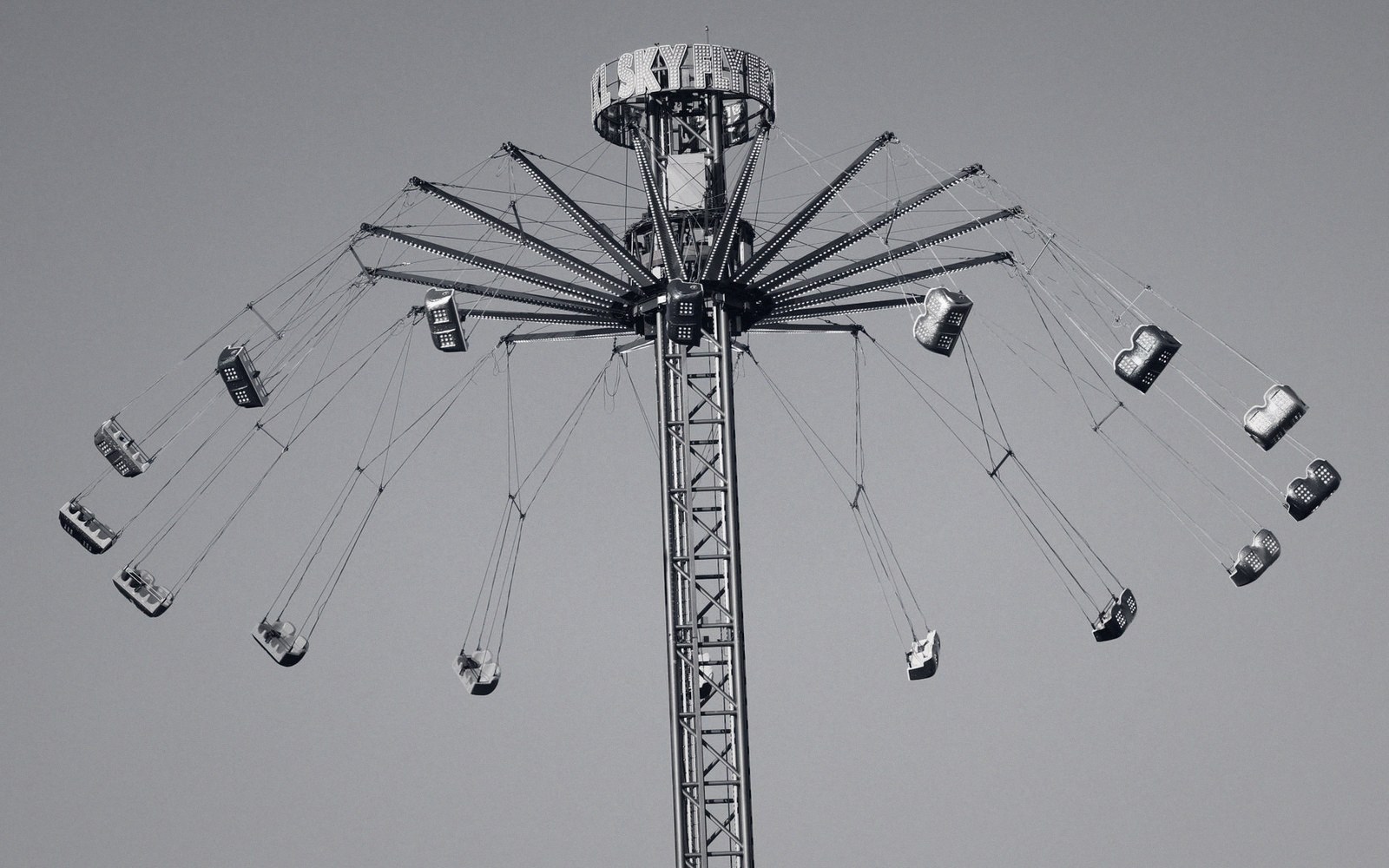
A performer on a wire is never still. How riggers work with the arc rather than against it, and why a two-second shot is the product of a much longer pendulum.
The Arc Is the System
Tie anything to a fixed point and let it swing: it will trace an arc, decelerate at the top of the swing, and return. That is not a flaw in wire work — it is the physics of wire work, and every rigging decision starts from accepting it. The question is never how to eliminate the pendulum but how to design around it so what appears on screen is only the part the shot needs.
The period of the swing — how long one full arc takes — depends almost entirely on the length of wire between the attachment point and the performer. A long wire swings slowly and with a broad, lazy arc; a short wire swings fast and tight. A coordinator and rigger will map this at the planning stage, using the geometry of the set — ceiling height, beam positions, the angle at which a flying rig can actually be mounted — to calculate what arc length they have to work with. The performance window, the usable portion of the swing where speed and angle match what the shot requires, might be a fraction of a second at the midpoint of a pass that takes several seconds to complete. That fraction is what the camera sees.
At the extremes of the arc — the dead points, where momentum runs out and the performer momentarily hangs before returning — two things become visible: the wire is under the least tension, and any lateral drift or off-axis rotation tends to surface. Riggers avoid letting those dead points fall anywhere near the filmed action. The edit takes care of entry and exit, but if a performer reaches the top of a swing inside the frame, the shot is usually unusable.
Horizontal Pass, Vertical Lift, and the Compromise Between Them
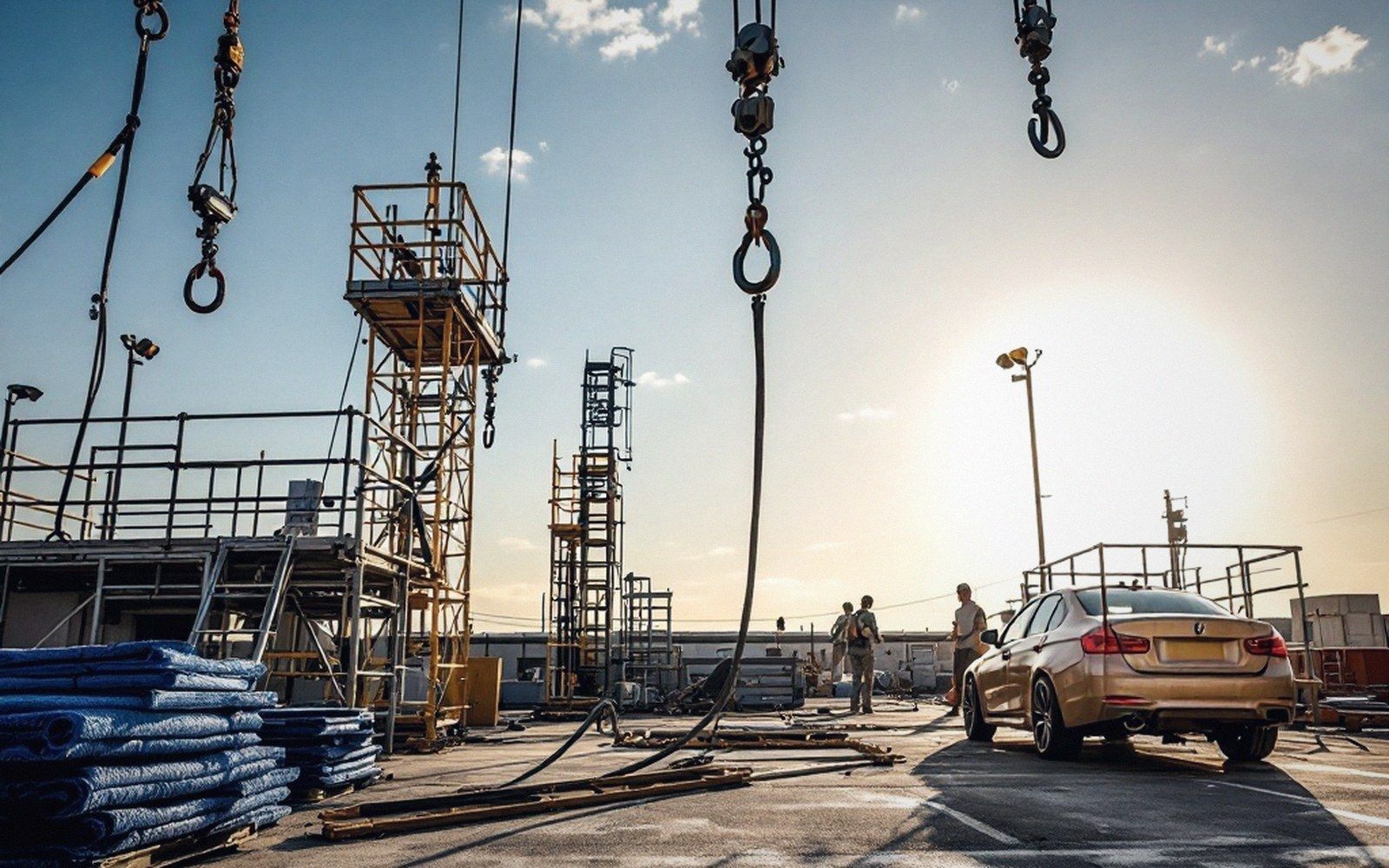
Most wire rigs operate at an angle: the attachment point is not directly overhead but offset forward or behind, so that pulling the performer toward the anchor creates a swing rather than a pure vertical lift. This is deliberate. A purely vertical pull — straight up — creates no swing arc but also produces no horizontal movement, which is rarely what the sequence calls for. The angle of the off-vertical pull determines how much of the applied force goes into lifting and how much goes into the horizontal pass.
That compromise means the performer is accelerating horizontally through the midpoint of the arc and decelerating as they rise. What the wire is actually doing at any moment is managing a changing ratio between those components. A two-point rig — two wires from different anchor positions, converging on a single attachment — can constrain the arc and reduce uncontrolled lateral swing, but it introduces its own tensions when the performer rotates, because the two wires load differently through the move. The choice between one point and two is partly a geometry decision and partly a control decision.
Counterweights and motor-driven track rigs compound the picture. When the attachment point itself moves — along a track mounted above the set, driven to match a camera vehicle — the pendulum behaviour changes at every moment because the pivot is moving. Riggers working with a travelling rig have to account for the fact that acceleration and deceleration of the track head will feed directly into the performer's swing. A sudden stop of the overhead track while the performer is mid-arc will amplify the swing; the timing of track moves is therefore choreographed as precisely as the performer's own action.
From the build
How the swing is shaped
- Wire length determines arc periodlonger wire, slower and wider swing; shorter wire, faster and tighter
- Attachment angle governs the ratio of vertical lift to horizontal travel
- Two-point rigs constrain lateral drift but introduce differential loading through rotation
- Moving track heads (travelling rigs) require their own choreography, because track acceleration feeds directly into performer swing
What the Camera Records
The pendulum shows up in the cut in ways that are easy to miss unless you watch for them. Performers arriving in frame are almost always at or near the midpoint of their arc, where speed is highest and the trajectory looks most purposeful. Brief shots — often a single camera position — isolate the useful window and cut before the deceleration becomes apparent. Repeated viewing reveals the entry and exit points that were trimmed; the swing that looks like it begins and ends with the action actually extends well beyond frame on both sides.
Fire-and-forget gags, where a single pass is the shot, depend entirely on that planning work: the arc is set, the camera position and lens are chosen to frame the midpoint, and the window either lands or it does not. There is no adjustment in the air. The rigger's job is complete before the performer is in the rig — the pendulum is already designed.
From the build
What "the performance window" means
- The usable portion of a swingtypically near the midpoint, where speed and direction match the shot
- Can be a fraction of a second within an arc that takes several seconds to complete
- Dead points (tops of the swing) are avoided inside frametension is lowest there and off-axis drift surfaces