Fire
What Burns and What Does Not
- Manages
- Fuel behaviour and heat
- Turns it into
- Combustion into a photographable flame
- In the hands of
- Special effects supervisor
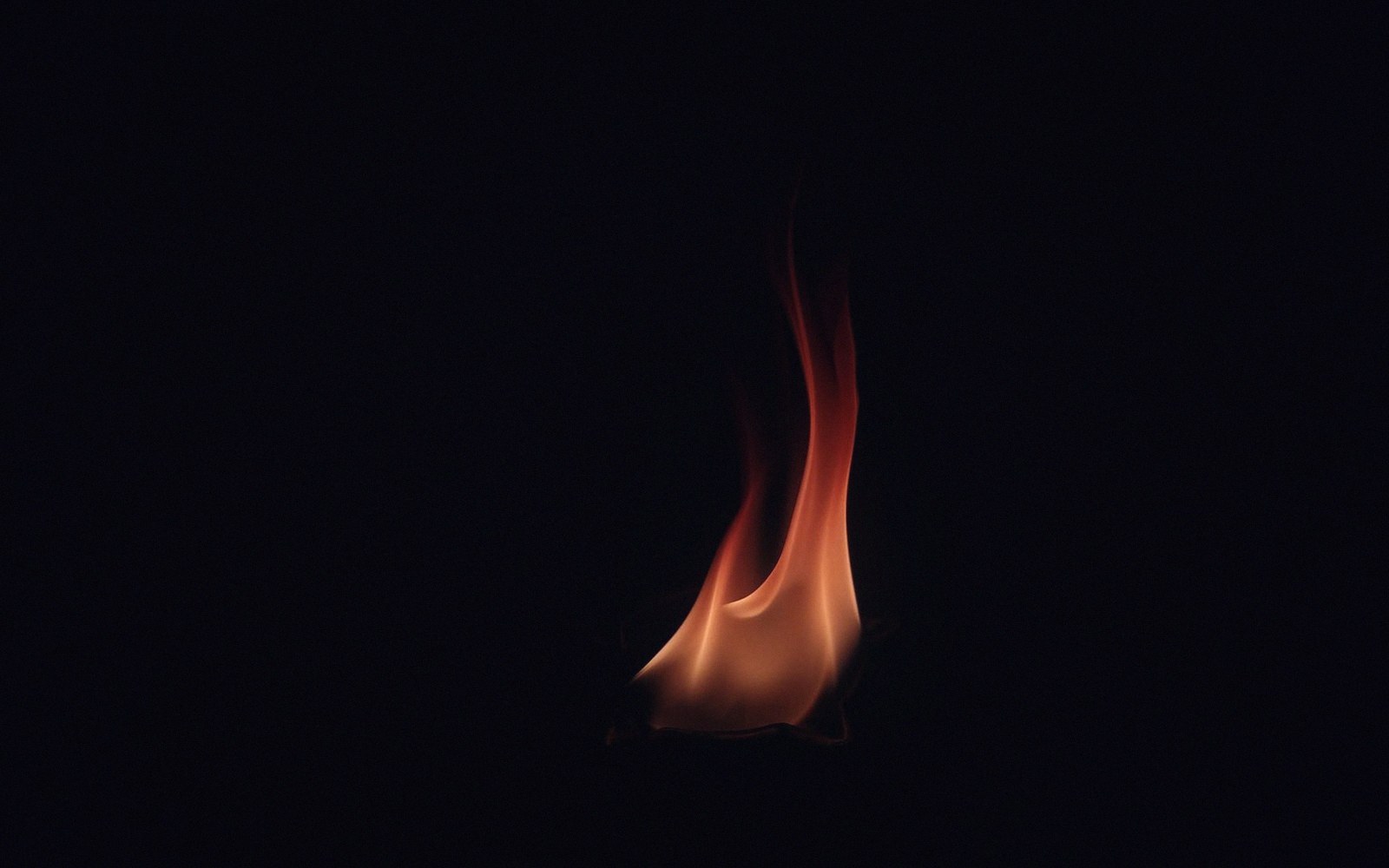
The fuel a coordinator chooses governs everything downstream — how long the gag runs, what the performer can survive, and whether the camera sees what the director imagined.
The Visible and the Invisible
Fire on screen is a lighting problem, a timing problem, and a heat problem, and none of those three tracks the others neatly. A flame that looks spectacular — tall, orange, roiling — does not necessarily carry the highest heat load. Conversely, a low, nearly transparent burn can be cooking a performer at a rate the camera would never suggest. This gap between what the image shows and what the body is experiencing is the central fact that shapes every fuel decision a stunt coordinator makes.
The fuels used in professional fire gags are chosen primarily to widen that gap in the performer's favour: maximum visible flame, minimum radiant and convective heat in the zone where the person is. That goal drives the selection more than any single other factor, and it explains why the choice is never simply "what burns well." Everything burns well enough; the question is what burns controllably, briefly, and with a heat signature the suit can absorb within the agreed time ceiling. The suit itself is built around those numbers.
Different fuels produce different flame colours, different burn durations at a given volume, and different heat outputs. A coordinator working with the director of photography will often balance fuel type against the available light and the camera position before the gag is locked — because a pale flame that reads as nearly invisible in bright sun is a different problem from the same flame photographed at dusk against a dark background. The fuel choice and the shooting conditions are not independent variables.
What Controllability Actually Means
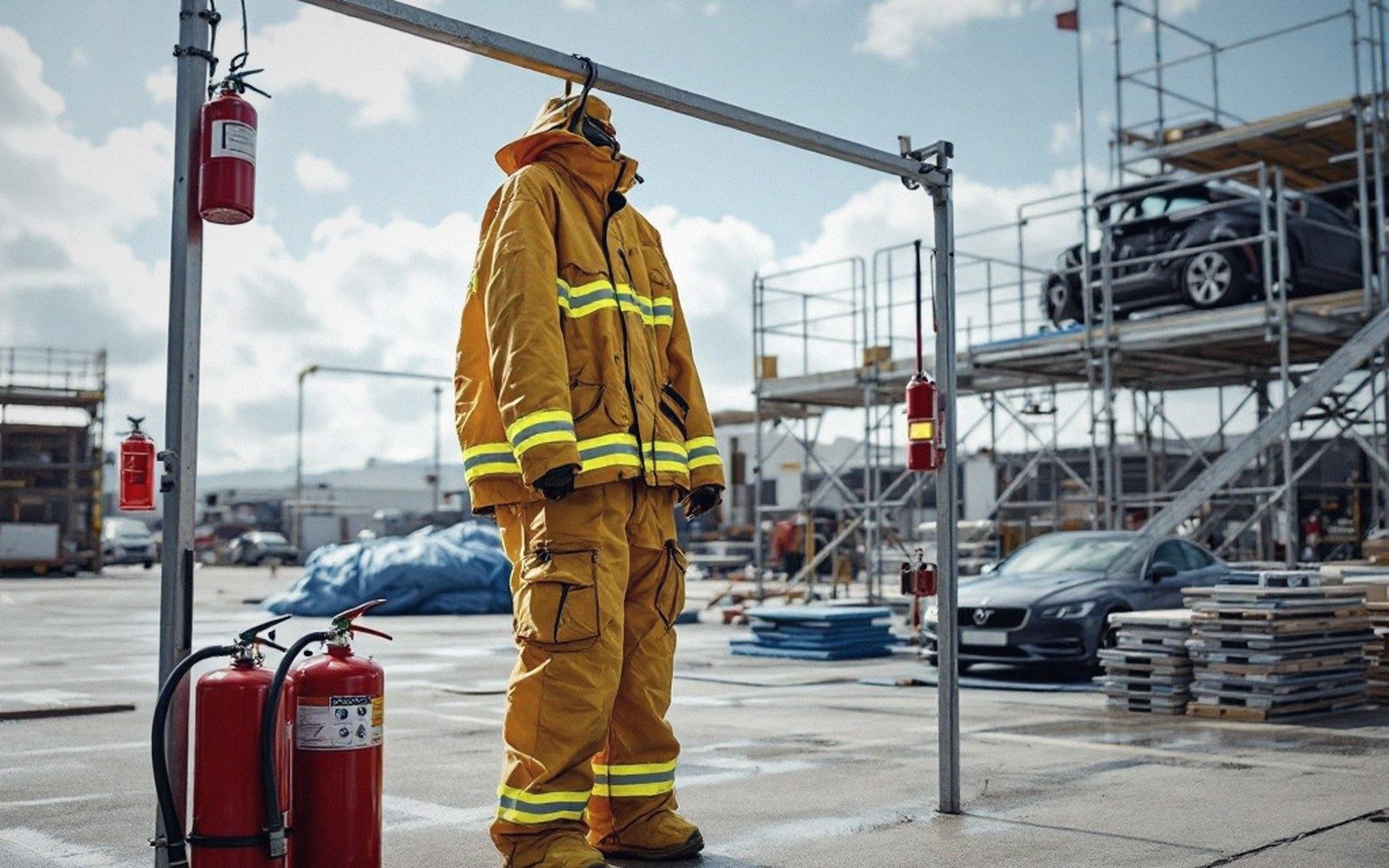
Controllability has a specific meaning in this context: the fire must ignite on cue, sustain for a known window, and extinguish cleanly when the safety crew moves in. Those three requirements pull in different directions. A fuel that ignites reliably may be harder to extinguish; one that puts out cleanly may be reluctant to sustain. A fire gag is therefore not a single decision but a system in which fuel type, application method, and the extinguisher positions just outside frame are all designed together. Changing one element after the others are set can invalidate the whole risk assessment.
The distinction between radiant heat and convective heat matters here too. Radiant heat travels in straight lines from the flame surface and can be partially blocked by the gel layers in a fire suit. Convective heat is carried in the moving hot gases that surround the performer, finds its way through gaps, and accumulates in the breathing air — which is why full-burn performers are almost always holding their breath for the duration of the gag, and why a longer burn is not simply a proportionally larger version of a shorter one. The risk does not scale linearly with time.
Burn duration is therefore treated as a hard ceiling, agreed before the gag begins and enforced structurally — by the coordinator, by the safety crew, and by the count, which is a verbal protocol as engineered as any physical rig. Once the ceiling is set, the fuel volume and application pattern are calibrated to it, not the other way around.
From the build
How the heat loads differ
- Radiant heattravels in straight lines from the flame surface; can be partially blocked by suit layers
- Convective heatcarried in moving hot gases; surrounds the performer, penetrates gaps, accumulates in breathing air
- Visible flame intensitynot a reliable indicator of either heat type; can mislead both camera and observer
What the Camera Does Not Tell You
A viewer watching a full-burn sequence sees the flame and reads the scale of it. What the image cannot convey is the thermal environment inside the suit during those seconds, or how much of the design effort went into the materials, the fuel selection, and the rehearsal structure that made the shot survivable at all. The flame is the least interesting part of the engineering.
What makes a fire gag repeatable — which is the practical test of whether it was designed well — is that every parameter was treated as a variable to be fixed rather than a condition to be tolerated. Fuel type, volume, distribution, burn duration, extinguisher placement, wind speed on the day: each one is a decision, not a given. The coordinator who has done that work will tell you the same thing in different words: the visible fire is what the director ordered, and the invisible engineering is what made it possible to order it twice.
From the build
The three controllability requirements
Second Unit is an independent publication about stunt work and practical effects. It is not an awards body, production company, training provider or industry organisation.