Fire
The Suit Buys Seconds, and the Count Is Agreed First
- Manages
- Heat load on the performer
- Turns it into
- Exposure into a counted window
- In the hands of
- Fire team and the performer
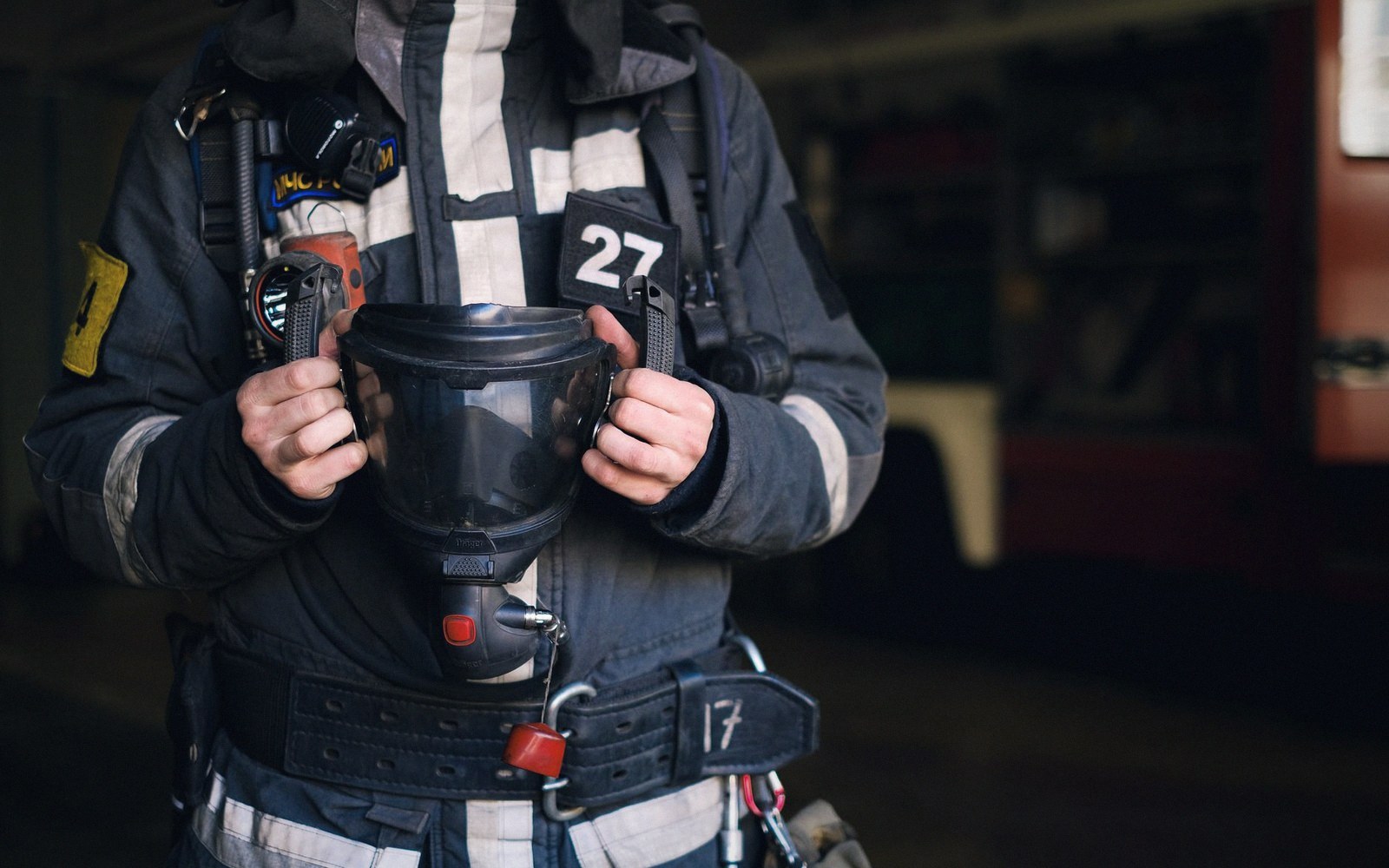
Every fire gag has a stop time decided before the fuel goes on. The suit is engineering; the count is protocol. Neither is optional.
The Clock Starts Before the Flame Does
A full body burn — the kind that fills a frame — is one of the most tightly planned sequences in practical effects work. It looks, from outside the monitors, like controlled chaos: a figure engulfed, moving through smoke, the camera catching details of fire climbing a torso. What it actually is, from inside the coordination, is a timed operation with a hard ceiling. The ceiling is agreed before the performer is ever dressed out, and every other decision — fuel choice, camera positions, the count, extinguisher placement — is made in relation to it.
The reason is simple and physiological. Heat transfers through a fire suit in a predictable but unforgiving way. The suit buys time; it does not cancel the clock. Everyone working the gag knows the difference.
What the Layers Are Actually Doing
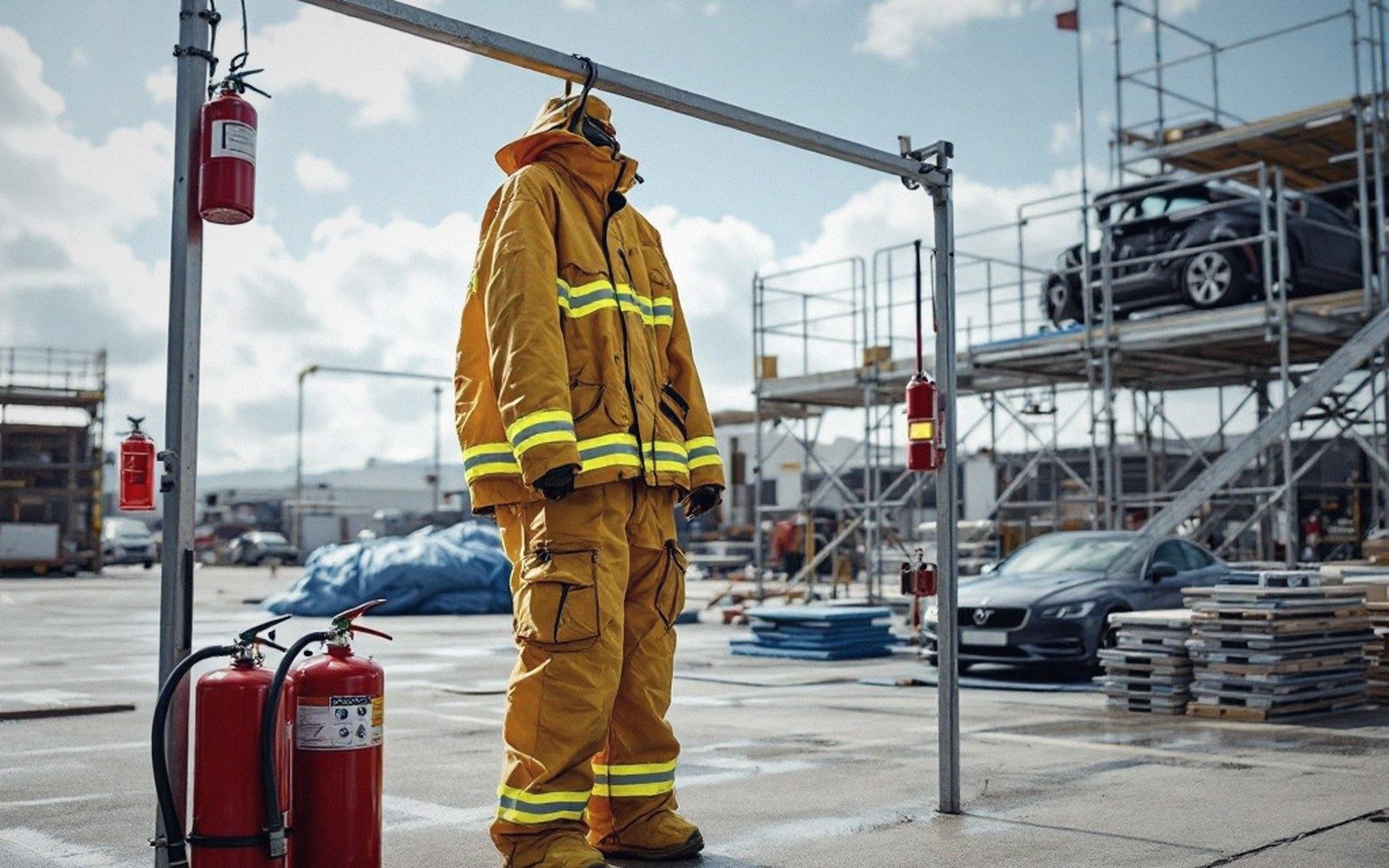
A fire suit is not a single garment. It is a system of layers whose combined job is to delay heat at the skin while the performer completes the gag and the safety crew reaches them. The outermost layer is typically a fire-resistant fabric — Nomex, or a similar aramid fibre — chosen because it chars rather than melts, which matters enormously when the alternative is burning synthetic material adhering to skin. Beneath that, a layer of fire-resistant foam traps a cushion of insulating air. Beneath that, another moisture-wicking barrier. And against the skin, yet another layer — sometimes wetted down with a water-based cooling gel before the suit goes on — that functions as a thermal buffer for as long as it stays cool.
That gel is not there for comfort. It is there because comfort is irrelevant; temperature differential is what matters. A wetted underlayer that starts cold has more capacity to absorb conducted heat before the performer's skin begins registering it. The cooling is temporary and it diminishes from the moment the fuel ignites. This is not a flaw in the system; it is the design logic. The system is sized to the agreed running time, with margin built in, and no longer.
From the build
How the suit works
- Outer layer (aramid fibre, e.g. Nomex)chars rather than melts; keeps burning material from adhering
- Fire-resistant foam layertraps insulating air
- Moisture-wicking inner barriermanages heat and sweat
- Cooling gel underlayer (often water-based)absorbs conducted heat while it stays cold; depletes in use
- Fire-resistant gel on exposed skin (face, neck, hands)burns off; coverage must be complete
Exposed skin is a separate problem entirely. Face, neck, ears and hands — any gap in coverage — are protected by fire-resistant gel applied directly. The gel burns off, which is why coverage must be thorough and why the makeup call before a full burn can take considerably longer than the burn itself. A partial application is not half the protection; it is potentially no protection at the edge of a gap.
The suit system, in total, is engineered around one variable above all others: how long the performer will be on fire. Every other specification follows from that number.
The Count Is the Architecture
Before any fuel goes anywhere near a performer, the coordinator, the performer, the safety supervisor and the people standing just outside frame have already agreed the count. Not roughly agreed — precisely agreed, with abort calls built in, spoken aloud in rehearsal without fire present until everyone can run it in sequence without prompting.
The count is the gag's architecture. It establishes: when action is called, when the performer begins moving, when the director gets the coverage they need, when the performer signals or reaches a mark that initiates the extinguish sequence, and when the gag is over regardless of whether the shot is complete. That last point is the one that separates fire coordination from almost any other department's workflow. The cut does not determine when the fire stops. The count does. If the director wants another second of coverage and the count says the gag ends now, the gag ends now. The count was agreed before the fuel went on; it is not renegotiated while the performer is burning.
From the build
The count's components
The abort call is equally precise. Every person with an extinguisher — and on a full body burn there is more than one — knows the abort signal: a specific word, a specific gesture, sometimes both. The abort does not require a decision in the moment; it requires a response to a pre-agreed cue. That distinction is the whole point. Decision-making under fire, literally, is slow and unreliable. Protocol executed from memory is fast and consistent. This is why rehearsal runs the count without fire present, repeatedly, until it is automatic.
The extinguish itself is not simply spraying CO₂ at a burning suit. Extinguisher operators are positioned in advance at angles that allow them to work efficiently without obscuring each other. The sequence of where to start — typically the head and upper body first to protect airway and vision — is pre-planned. After the main extinguish, the suit is checked, the performer assessed, and a medic is immediately present. None of this is improvised.
Heat transfers through a fire suit in a predictable but unforgiving way.
The Margin, and What Happens When It Narrows
The window between "the suit is doing its job" and "the suit has reached its limit" is not visible from outside. There is no indicator, no warning colour, no sound. The only reliable measure is time, and time is why the count is the ceiling and not the target.
Experienced coordinators build margin into the agreed running time. The gag is planned to end before the suit's limits are approached, not at them. This margin absorbs variables — a performer who moves differently under live fire than in rehearsal, a slight delay in the extinguish reach, a camera position that requires the performer to hold a mark a beat longer. Margin is not pessimism; it is the difference between a repeatable gag and one that cannot be done again tomorrow.
When margin narrows — when a shot runs long, when an abort is delayed, when cooling prep has been compromised — the injury risk rises sharply and not linearly. Burns are not proportional to seconds over; tissue damage accelerates with sustained temperature. This is why the right to call a stand-down belongs to the safety supervisor and the performer both, without negotiation, and why that authority is structural rather than dependent on anyone's confidence in the moment. The coordinator has spent days building the architecture precisely so that no single person's judgment under pressure is the last line of defence.
Before and After Are the Gag Too
The visible portion of a fire gag — the performer on fire, the camera running — is perhaps twenty percent of what the day involves. The dressing-out process is methodical and long. The cooling prep is timed in relation to when the fuel will go on. The camera is locked off or its positions are pre-agreed so no operator is moving near the performer during the burn. The set is cleared to essential crew only: coordinator, safety supervisor, extinguisher operators, medic, camera, and director. Everyone who does not have a specific job in the gag sequence is not present.
After the extinguish, the suit comes off in a controlled sequence. The performer's skin is assessed. The medic's role here is not precautionary box-ticking; it is a real functional step, because the adrenaline state a performer is in immediately post-burn can mask sensations that will become apparent within minutes. The post-gag check is part of the gag.
Margin is not pessimism; it is the difference between a repeatable gag and one that cannot be done again tomorrow.
What makes a full body burn repeatable — what allows a production to schedule a second attempt if the first pass had a camera issue — is that all of this was treated as engineering the first time. The suit was specified to the agreed running time. The count was rehearsed until it was automatic. The margins were built in rather than relied upon. The spectacular part, the part that fills the frame, is the outcome of the six hours that preceded it, run by people whose entire focus is making it survivable, then doing it again.