Fire
Fire Is a Lighting Problem Too
- Manages
- Exposure and frame rate
- Turns it into
- Real heat into screen scale
- In the hands of
- Cinematographer and gaffer
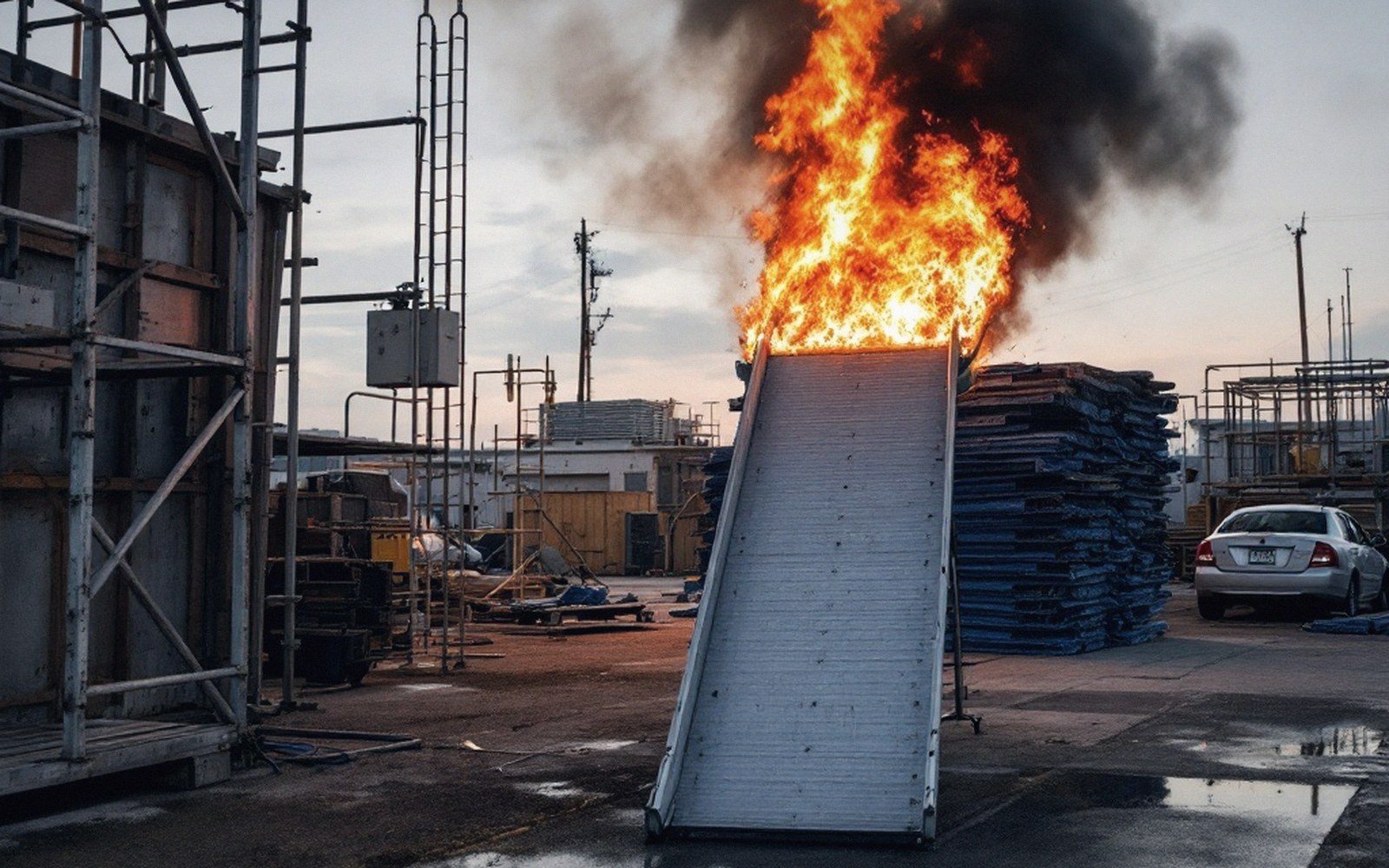
A burn looks enormous on set and modest on screen. The reason is almost entirely photographic.
The Camera Sees Differently Than a Human Eye Does
Stand fifty feet from a fuel burn and your eyes continuously adjust. Pupils contract, peripheral detail stays legible, and the brain compares the flame against everything around it — the unlit ground, the dark sky, the crew at the perimeter. The fire reads as enormous because the eye has reference points everywhere.
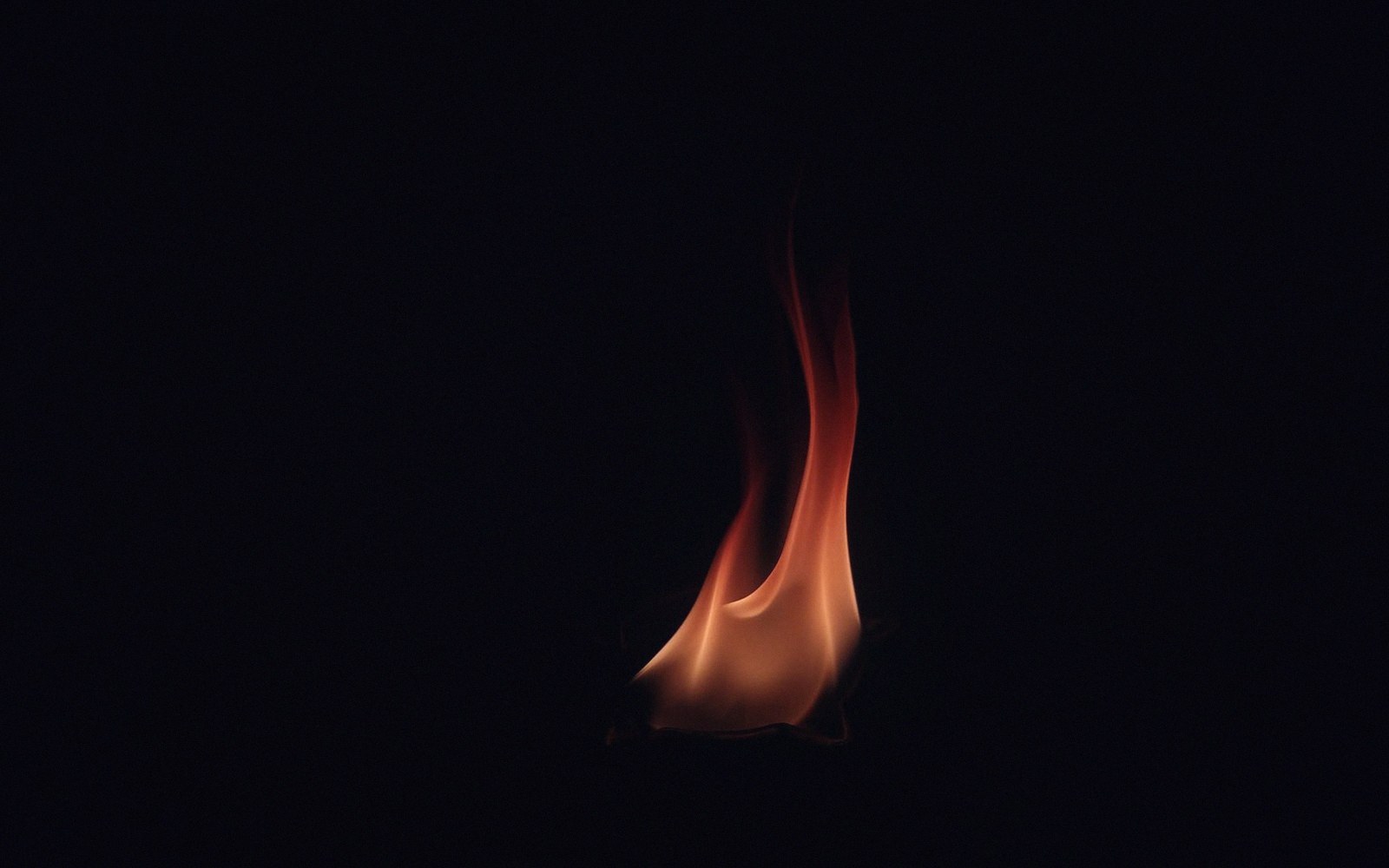
A camera has none of that intelligence. The sensor or film stock is set to a single exposure value before the take begins, locked to whatever the ambient light demands. If it's a daytime exterior, the base exposure is already high — and a flame, which generates its own light, will blow out, collapsing from a textured, layered thing into a flat white core with clipped edges. The visual information that makes fire feel dangerous — the depth in the burn, the variation in colour from blue base to orange crown — simply disappears.
This is why cinematographers working with the stunt coordinator and the pyrotechnical team bias toward lower ambient light whenever the schedule allows. Night exteriors, overcast days, interior stages where practicals can be dialled down: each of those environments lets the camera open up its iris just enough to read the fire rather than be overwhelmed by it.
Frame Rate, Density and the Look of Real Fire
The second lever is frame rate. Standard acquisition — 24 frames per second in most theatrical work — happens to match the way the eye perceives smooth motion, but fire doesn't move the way a body or a vehicle does. A flame's movement is turbulent, stochastic, constantly self-interrupting. At 24 fps it can look thin and fast. Shot at a slightly overcranked rate and played back at 24, the same burn moves with more apparent weight; the fuel has time to catch, breathe and develop between frames rather than flickering through them.
Overcranking also affects exposure, since each frame accumulates light for a shorter interval. The camera can now handle a more intense burn without clipping — which is a secondary reason the approach is common — but the primary gain is that the fire develops a sense of physical mass that real fire, paradoxically, sometimes lacks on a standard frame rate pass.
From the build
The photographic variables
What Gets Lost Between Set and Screen
Stunt coordinators who have spent time around camera operators will recognise the note: the fire looked right in the monitor but not in the cut. The reason is usually the edit, not the photography. A single fire gag is a contained event with a clear beginning and a clear end, and if it's cut long enough for the audience to settle into it, the exposure logic works. Cut it short — as action editors often do to accelerate pace — and the viewer never acquires the visual context to judge the scale. A four-second hold makes a burn legible; a one-second insert just makes the frame bright.
Burn diameter, camera distance and lens length interact in ways that compound this. A wide lens used close reads the surrounding darkness and makes the fire appear to occupy the frame; a long lens used at distance compresses that same darkness away and isolates a smaller-looking core. Neither choice is wrong — they produce different visual arguments — but the choice is made before the performer enters the gag, built into a camera plot that has to satisfy both the director's cut intent and the minimum safe distance for the camera crew.
That minimum distance is not a creative suggestion. It is set by the coordinator and the pyrotechnician together, with the medic and the safety officer already positioned, before any other photographic preference enters the conversation. The camera solves its exposure problem within the envelope that the safety of the shoot defines, not the other way around.
From the build