Fire
The People Standing Just Outside Frame
- Manages
- The seconds after the call
- Turns it into
- A burn into something reversible
- In the hands of
- Extinguisher team, medic, safety officer
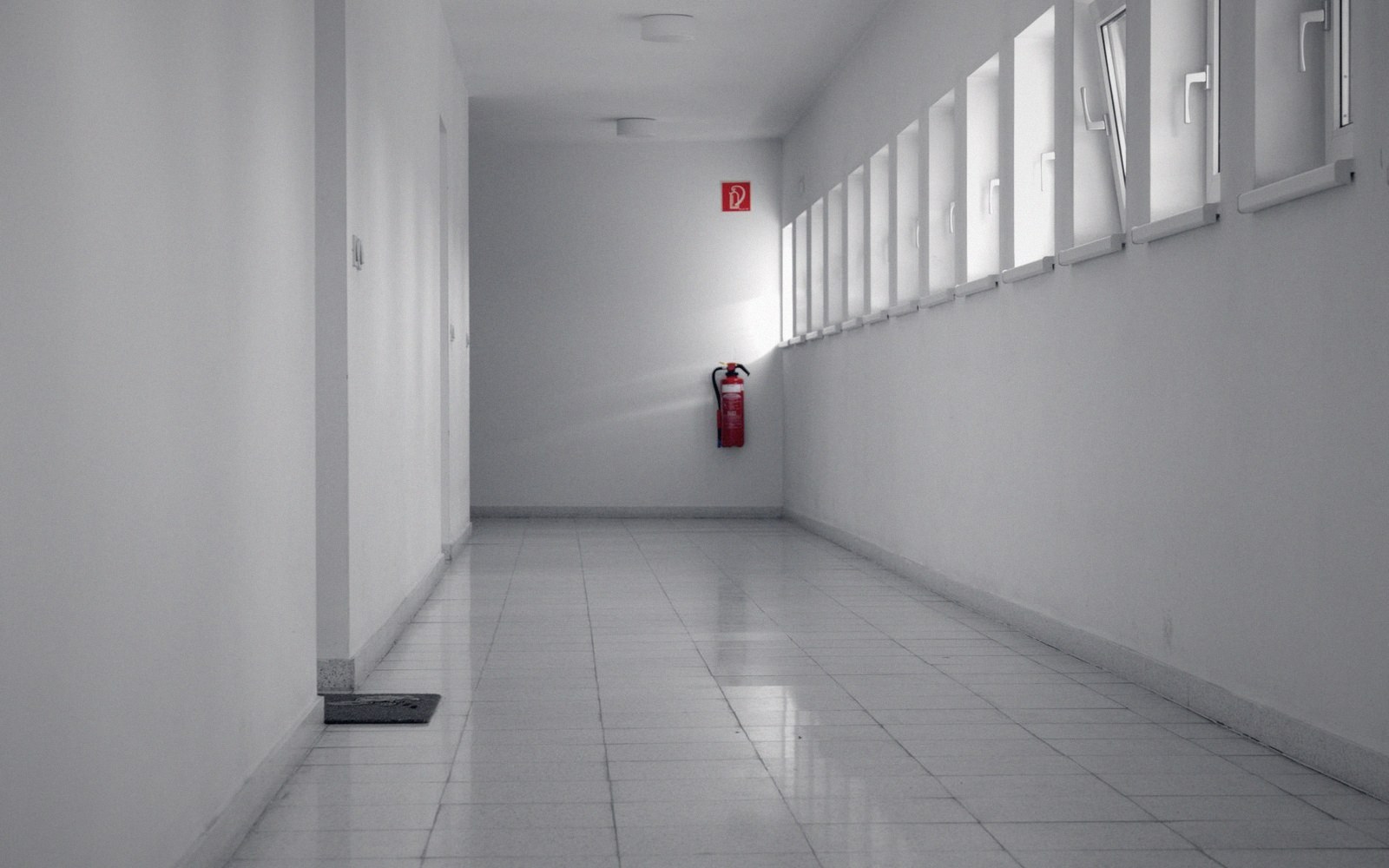
A burn is over in seconds. The apparatus that makes it survivable takes all day to set up, and it never appears on screen.
The Frame Ends Before the Safety Crew Begins
Watch a fire gag closely and you will notice the shot is tighter than it needs to be. That is not a coincidence. The camera is framing out a ring of people — extinguisher operators, a medic, a safety officer, a dedicated abort caller — whose presence is the actual condition under which the gag runs. The performer is the visible part of the machine. Everyone standing just outside the lens is the machine.
The number of people in that ring, their positions relative to the burn, and what each one is authorised to do are agreed in detail before any fuel is measured out. This is not improvised on the day. The fire coordinator — in some territories called a pyrotechnic supervisor — drafts the surrounding apparatus during the same process that establishes how the performer is protected. The suit buys seconds, and the crew outside frame is what happens when the count runs out.
Positions, Roles, and Who Can Call It
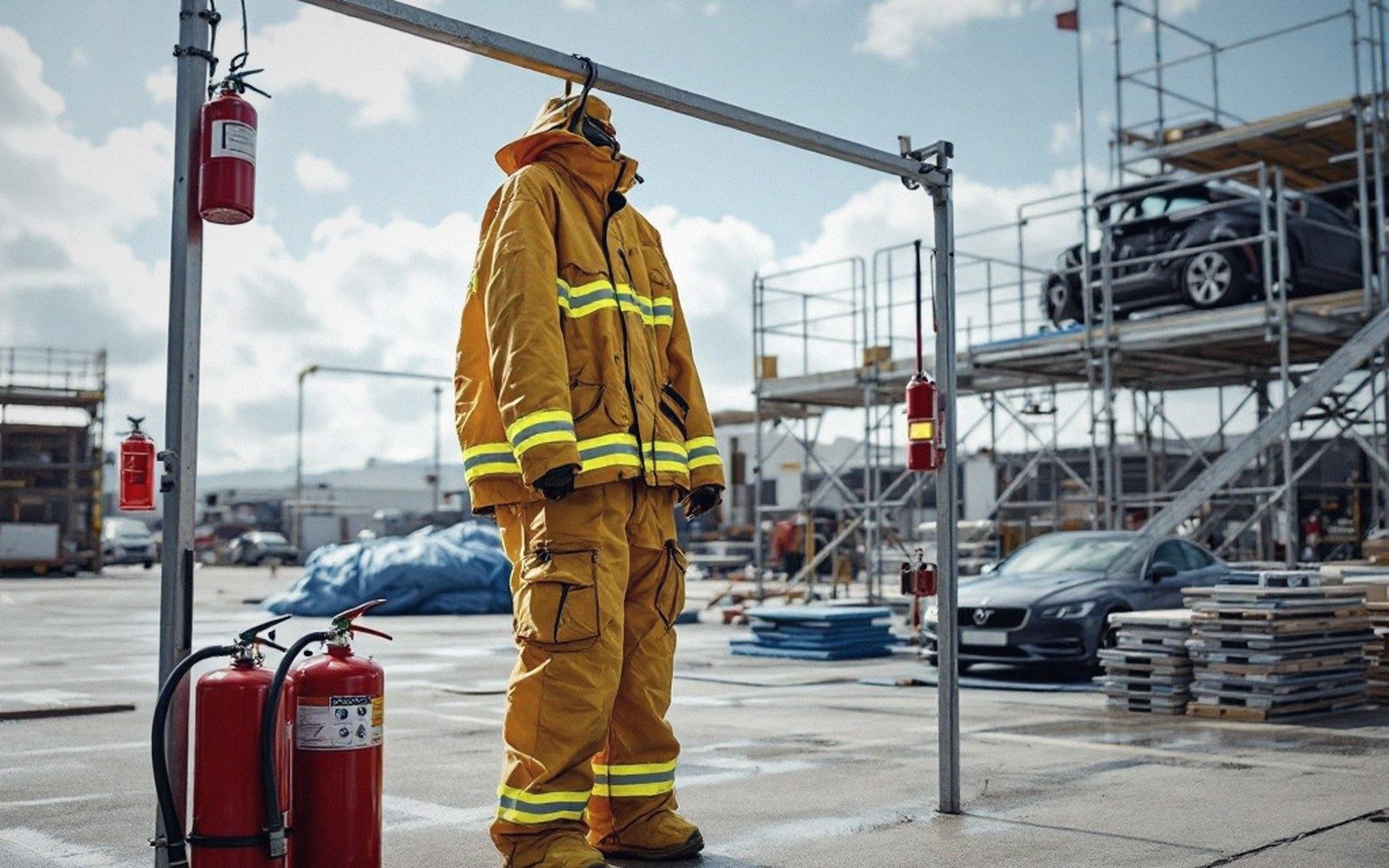
Extinguisher operators are assigned specific arcs of coverage, not a general area. The principle is straightforward: if the rig is thought of as a clock face, no arc of approach is left unowned. Each operator knows which part of the performer is their responsibility, how to approach without crossing another operator's line, and what their abort cue sounds like. Carbon dioxide extinguishers are used differently than dry chemical, and the choice between them for a given gag reflects the burn type, the proximity of camera equipment, and what the performer needs in the immediate aftermath — some suppressants obscure vision and make a disoriented performer harder to guide clear.
The medic's position is fixed before the gag runs, and it is not wherever happens to be convenient. They stand at the closest safe distance that still keeps them outside the fire's zone, with a clear path to the performer that will not require crossing the extinguisher teams mid-operation. On larger burns involving vehicle work or multi-performer rigs, there may be more than one. The medic's job in the seconds after a cut is triage and stabilisation; on a well-run set, they have already confirmed with the coordinator exactly what to expect — which areas of the body were exposed and for how long — so that assessment begins before anyone speaks.
The safety officer holds a different kind of authority. Their role exists at the level of the overall setup: are the conditions that were agreed upon this morning still the conditions that exist right now? Wind has changed. A secondary fuel source has shifted. A piece of costume was not constructed to the spec that was signed off. The safety officer can delay the gag or stop it entirely on the basis of any of those observations, and their authority to do so does not require the director's agreement. That structural independence is the point.
From the build
Crew positions and what they own
Then there is the abort caller. On a straightforward burn this may be the coordinator themselves; on a complex or long-duration gag it is often a dedicated person with no other task. They watch the performer and one thing only — not the camera angle, not the director's expression, not whether the shot is working. Their cue to call the abort is agreed in advance: a specific signal from the performer, a count that has elapsed, any visible anomaly in how the fire is behaving. When the call is made, every operator in the ring responds to it simultaneously. The performer does not have to communicate distress. The system acts before distress becomes injury.
The Rehearsal Includes This Crew
What is easy to miss is that the ring of people outside frame rehearses too. Not with fire, but with the same positions, the same movement paths, the same abort calls. The extinguisher operators walk their approach lines. The abort caller runs the count aloud. The medic confirms the access route has not been blocked by equipment that arrived after the morning walkthrough. This rehearsal is not a formality. The moment a live burn starts, noise levels rise, communication narrows, and the only thing any crew member can rely on is the move they have already drilled. Improvisation in a fire gag is a failure condition, not a skill.
The visible spectacle of a burn — the height of the flame, the performer moving through it — is the product of everything these people have built around it. The shot exists because the abort infrastructure is solid enough that the coordinator can commit to the take. That is the correct order of causality, and it runs in one direction: safety apparatus first, camera second. The frame is drawn where it is drawn deliberately. The most important people in a fire gag are the ones you never see.
From the build