Vehicles
A Car Prepared to Do One Thing, Once
- Manages
- Crash loads through a shell
- Turns it into
- A road car into a single-use rig
- In the hands of
- Picture-car fabricators
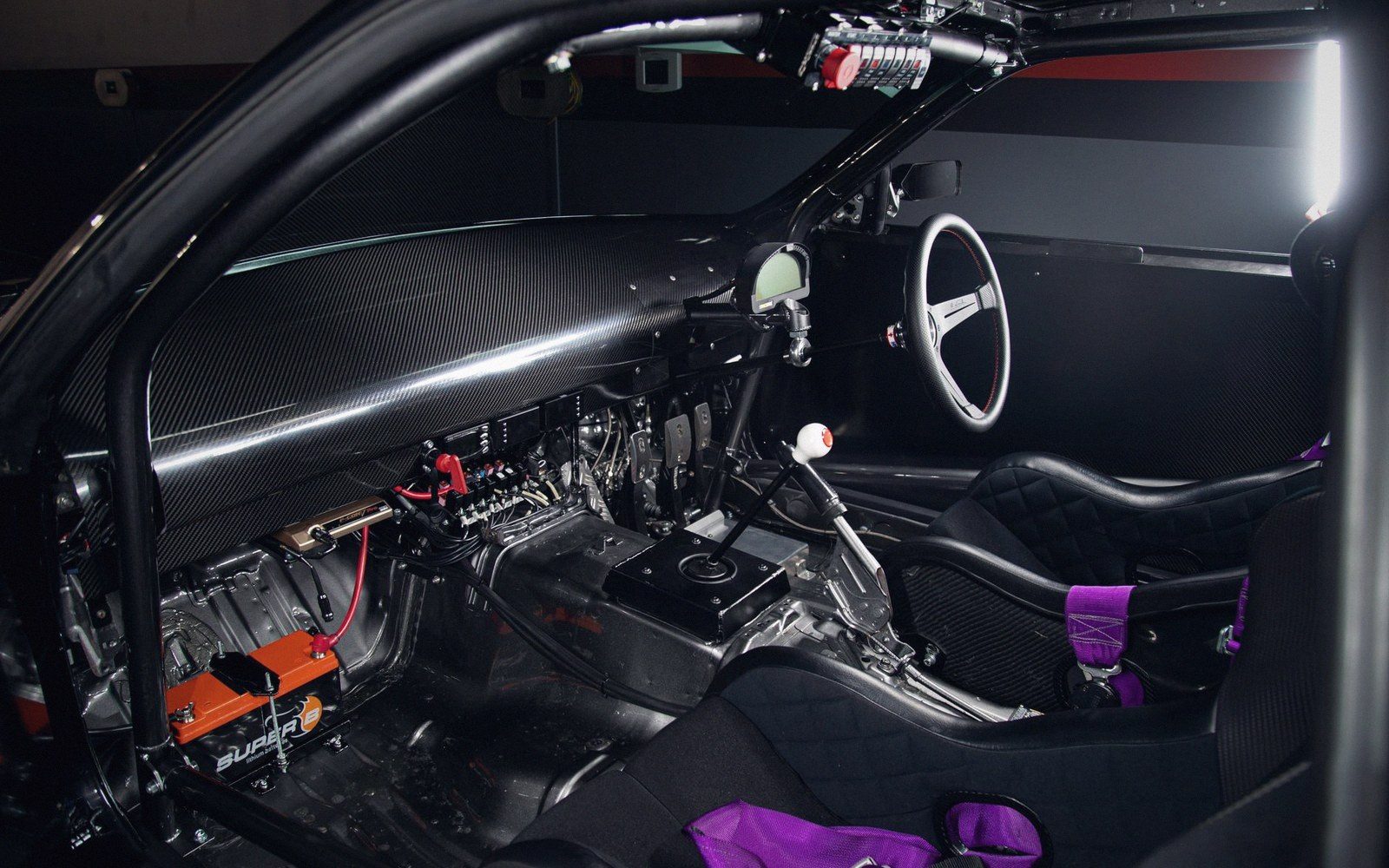
Every modification on a picture car is a commitment — to the gag, to the performer, and to the fact that this vehicle is never going back.
What the Car Becomes Before It Moves an Inch
The car you see on screen seldom began as a stunt vehicle. It was sourced as a match — same make, model, colour and trim as the hero car the actors are photographed in — and then methodically disassembled and rebuilt into something a road-car manufacturer would not recognise as their product. That transformation happens in a prep shop, usually weeks before principal photography, and the work is as much structural engineering as it is mechanical. Every system is interrogated. Everything that could become a projectile, a fire source or a trap is either removed, relocated or reinforced. The car ends this process incapable of passing any road-worthiness inspection, and nobody involved considers that a problem. It was not built to be roadworthy. It was built to do one specific thing, as safely as that thing can be done.
The cage comes first in any serious build. A roll cage is welded into the cabin structure — not bolted, not clipped, welded — and extends from the floor to the roof pillars to form a continuous structure that the body of the car is essentially hanging around. On a vehicle prepared for a roll or a high-speed impact, the cage is the car's real skeleton; the pressed-steel body panels are, at that point, cosmetic. The geometry of the cage is calculated against the forces expected in that specific gag: a barrel roll generates different loadings than a broadside T-bone, and a vehicle rigged for a pipe-ramp launch absorbs the launch and landing in a different axis than one prepared for a controlled skid. The cage is not generic safety hardware from a catalogue. It is the first place the coordinator's breakdown translates into metal.
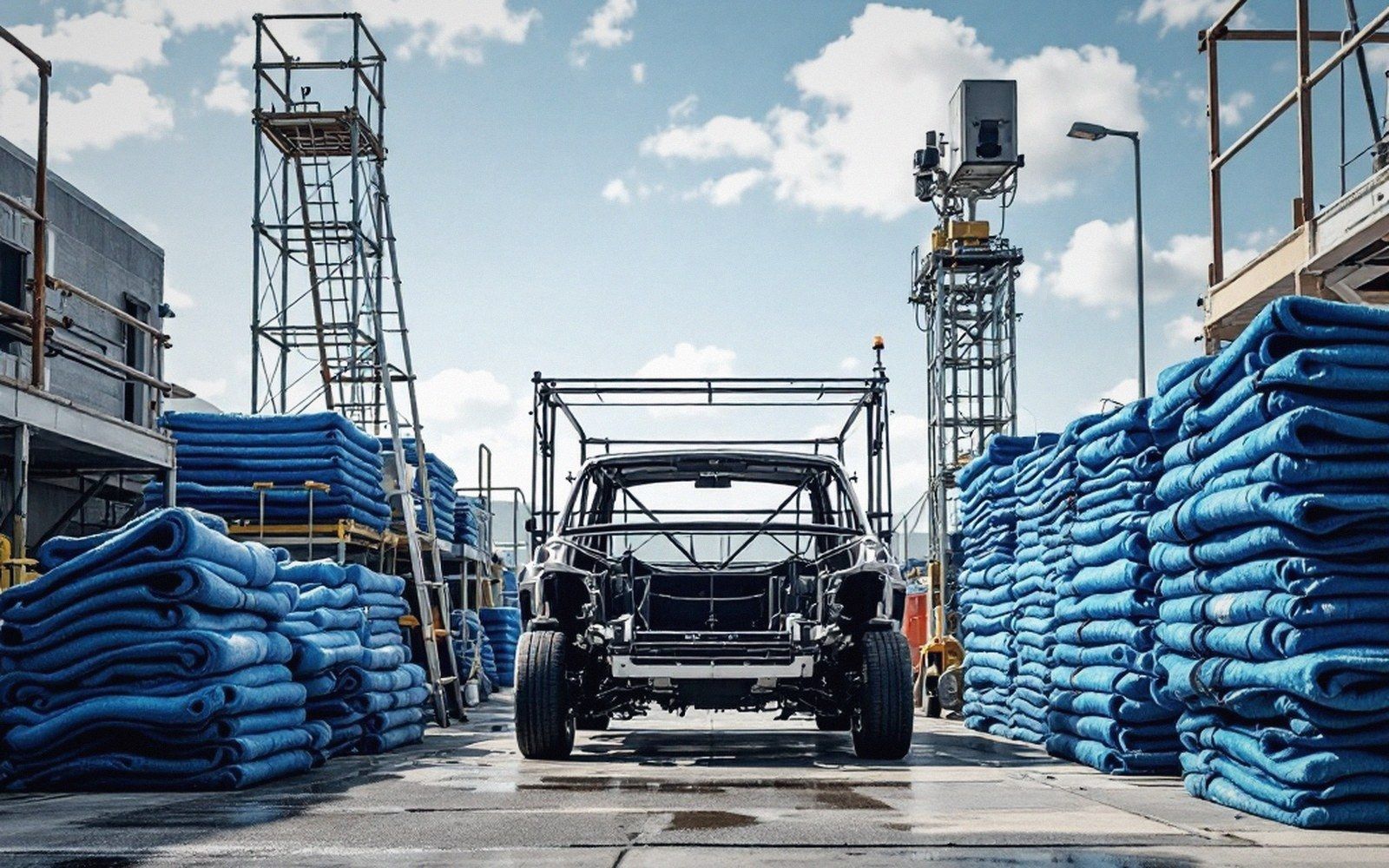
Glass comes out almost entirely. Laminated windscreens on production cars are designed to resist penetration, which is a virtue in a road accident and a hazard in a prepared stunt car: glass that does not shatter cleanly can produce exactly the facial injury pattern it was designed to prevent in a crash, because in a controlled stunt the forces arrive from unexpected angles. The windscreen is typically replaced with a specialist material — in most contemporary builds this is a clear-cast polycarbonate sheet, fitted into the original aperture so that cameras read it as glass — or removed entirely if the camera angle and the nature of the gag allow it. Side windows go out without replacement. The read-through transparency that matters on screen is provided in post, or by careful camera placement, or simply by accepting that the interior is darker. The stunt performer's visibility is the priority; everything else is downstream of that.
From the build
What gets removed and why
Fuel, Battery and the Things That Start Fires
The standard fuel system on a production car is designed for fuel economy, emissions compliance and repairability at a dealership. None of those priorities are relevant to a stunt build. The relevant priority is that a tank that ruptures in a roll does not become an ignition source. A fuel cell — the term used in racing and stunt preparation alike — replaces the OEM tank with a container built around a foam-filled bladder. The foam is not there to absorb fuel; it is there to prevent the interior of the tank from sloshing in a way that could create an explosive vapour pocket, and to resist the kind of sudden structural collapse that turns a punctured tank into a fuel spray. The cell is also relocated. Where the factory tank sits is determined by packaging and crumple-zone logic; where the stunt cell sits is determined by which part of the car the coordinator expects to take impact and which part needs to stay intact. On most roll builds, the cell moves into the rear interior, protected by the cage geometry.
The battery is another relocation job, and for a closely related reason. A standard 12-volt lead-acid battery sitting in the engine bay does not need to be involved in a side impact — but it often is, because that is where the factory put it, and a short-circuiting battery in a car that has just rolled is one of the faster ways an on-set fire starts that nobody planned for. The battery moves to the interior, again within the cage envelope, and is bracketed so it cannot shift under any loading the gag is expected to generate. On vehicles with larger battery systems — hybrid drivetrains, any of the high-voltage architectures increasingly common in sourced vehicles — the prep work around the electrical system is substantially more involved, and the coordinator will have consulted an electrician with specific experience in high-voltage isolation before any other work begins.
The steering and braking systems are usually retained in function but modified in character. A stunt driver needs to move fast between oversteer correction and straight-line braking; a standard power-steering rack calibrated for comfort-oriented street driving responds too slowly and with too much assistance to let a performer feel what the car is doing. Most stunt builds tighten the steering ratio and, on vehicles rigged for very specific manoeuvres, fit a separate hydraulic handbrake — a fly-off handbrake in trade terminology — that locks the rear wheels independently of the main pedal circuit. This is the mechanism behind every precisely executed 180-degree turn you have seen in a corridor or carpark; the geometry of the spin is controlled by the point at which the rear locks relative to the car's speed and angle of approach.
From the build
How the gag shapes the build
- Cage geometrycalculated for the specific forces of this gag (roll vs. broadside impact vs. ramp launch), not generic
- Harness mountingpositioned for this performer's build, this seat position, this expected direction of impact
- Battery and fuel-cell placementdetermined by which surfaces the coordinator expects to take impact
- Steering and braking calibrationtightened for performer feedback; fly-off handbrake added for rotation gags
The Car That Cannot Go Back
There is a concept in stunt preparation that does not have a single name but is understood by every coordinator: the one-time vehicle. A picture car built for a roll, a high-speed impact or a pipe-ramp launch is being consumed by the gag. The cage is sized for the forces the gag is expected to produce, not for whatever forces a future gag might produce. The fuel cell is positioned for this approach angle. The harness mounting points — and there are always harness mounting points, integrated into the cage structure so the five-point or six-point harness the performer wears has a load path that goes straight into the roll cage, not into the factory seat-belt anchors which were never designed for those forces — are positioned for this seat position, this performer's build, this expected direction of impact.
The harness itself is worth dwelling on because it is, along with the cage, the most consequential piece of engineering in the build. A racing harness and a stunt harness overlap in specification — both are multi-point systems with quick-release mechanisms — but the stunt application adds requirements that racing does not: the performer may need to exit the vehicle very quickly in a direction other than the one the doors are on, the release mechanism therefore needs to be operable one-handed and in low-visibility conditions, and the mounting geometry needs to account for the possibility that the car comes to rest inverted. Every one of those conditions is worked through in the prep shop, and the harness mounting is signed off by the coordinator and a rigger before any of the cosmetic finishing work — the paint-match, the interior dress, the exterior trim that makes the car read as the hero vehicle — goes on.
That transformation happens in a prep shop, usually weeks before principal photography, and the work is as much structural engineering as it is mechanical.
Once the gag is done, the vehicle is assessed. Sometimes the body can be stripped and the cage, cell and harness system recovered for another build; more often, the structural members of a cage that has taken load are treated as compromised, because metal that has deformed under impact has an unknown fatigue profile. The car is not repaired to stunt-ready condition and reused for the same type of gag. This is not waste — it is the logic of a system where the acceptable-risk calculation depends on knowing the full history of every component in the load path. What you cannot know, you do not trust.
The result, when everything is done correctly, is a vehicle that looks like a car and handles like a carefully engineered single-purpose tool, crewed by one person who has rehearsed the specific sequence of inputs required, surrounded by a team whose only job for the duration of the shot is to make sure it all goes as planned — and to be in position if it does not.