Vehicles
The Ramp and the Roll
- Manages
- Approach speed and angle
- Turns it into
- Momentum into rotation
- In the hands of
- Precision driver and coordinator
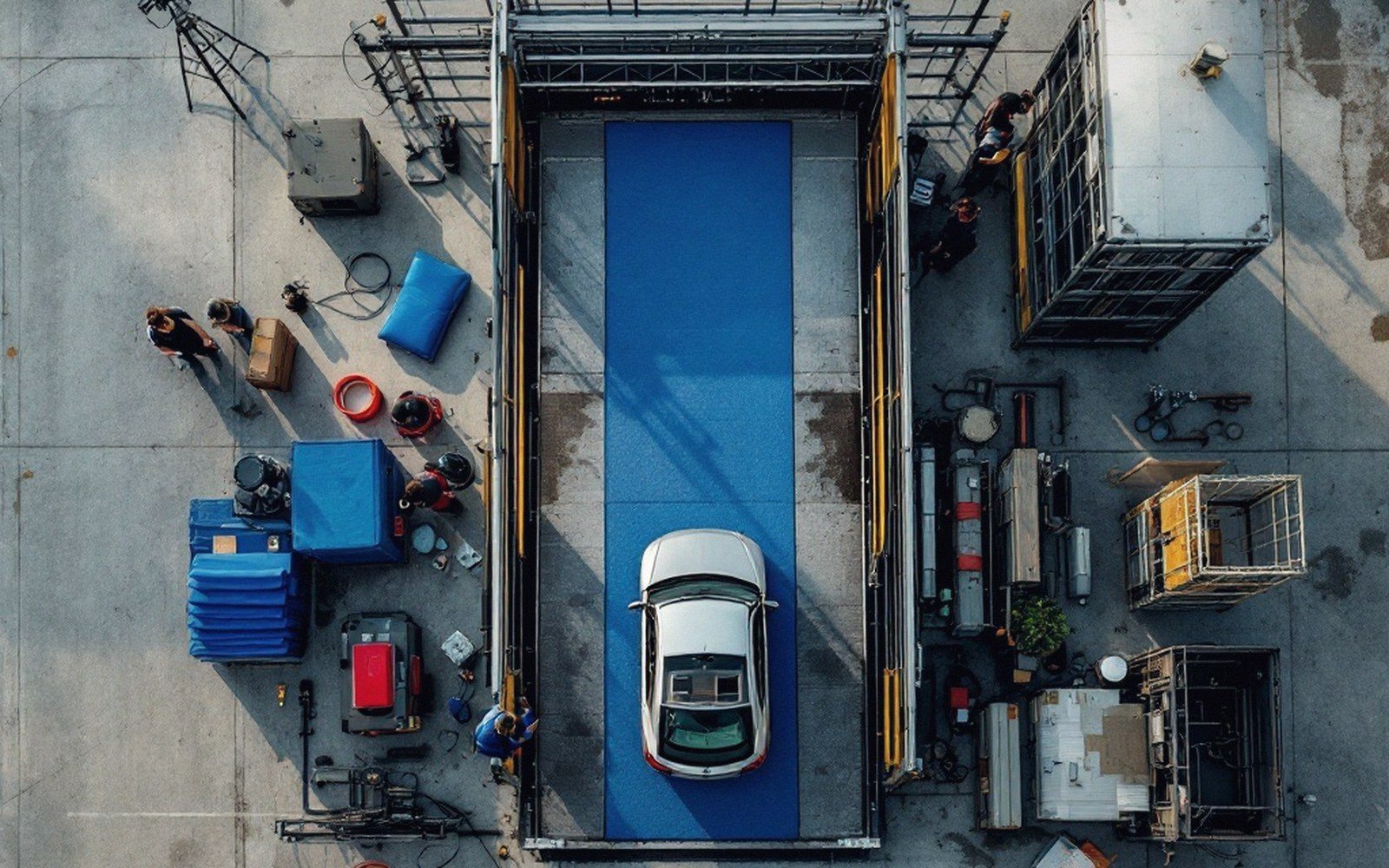
A Roll Gag Is Written in Geometry Before It Is Written in Anything Else
The most reliable way to misread a roll sequence is to watch the car and ignore the ground. The ground is where the decision was made. Somewhere just off the tire marks — sometimes visible, sometimes dressed out of frame — is a ramp, and the ramp is the whole argument. Everything the car does from the moment it leaves contact with the road surface is a consequence of what the ramp does to it: the speed, the angle, the moment the weight transfers, the axis on which the vehicle tips and the rate at which it tips. The stunt coordinator does not direct the roll; the ramp does. The coordinator's job, weeks earlier, was to direct the ramp.
A vehicle rolls, in the physics sense, because its center of gravity crosses outside the footprint of its wheels. Get a car moving fast enough laterally, or tip it onto a rising surface at the right angle, and the math takes over. On a real road that crossing happens chaotically, driven by a hundred variables no one controls. On a film set it happens because a fabricated ramp transfers the car's kinetic energy into rotational energy in a specific direction, at a specific point, with a specific rate of onset. The chaos is still there, but it has been channeled. That channeling is the engineering.
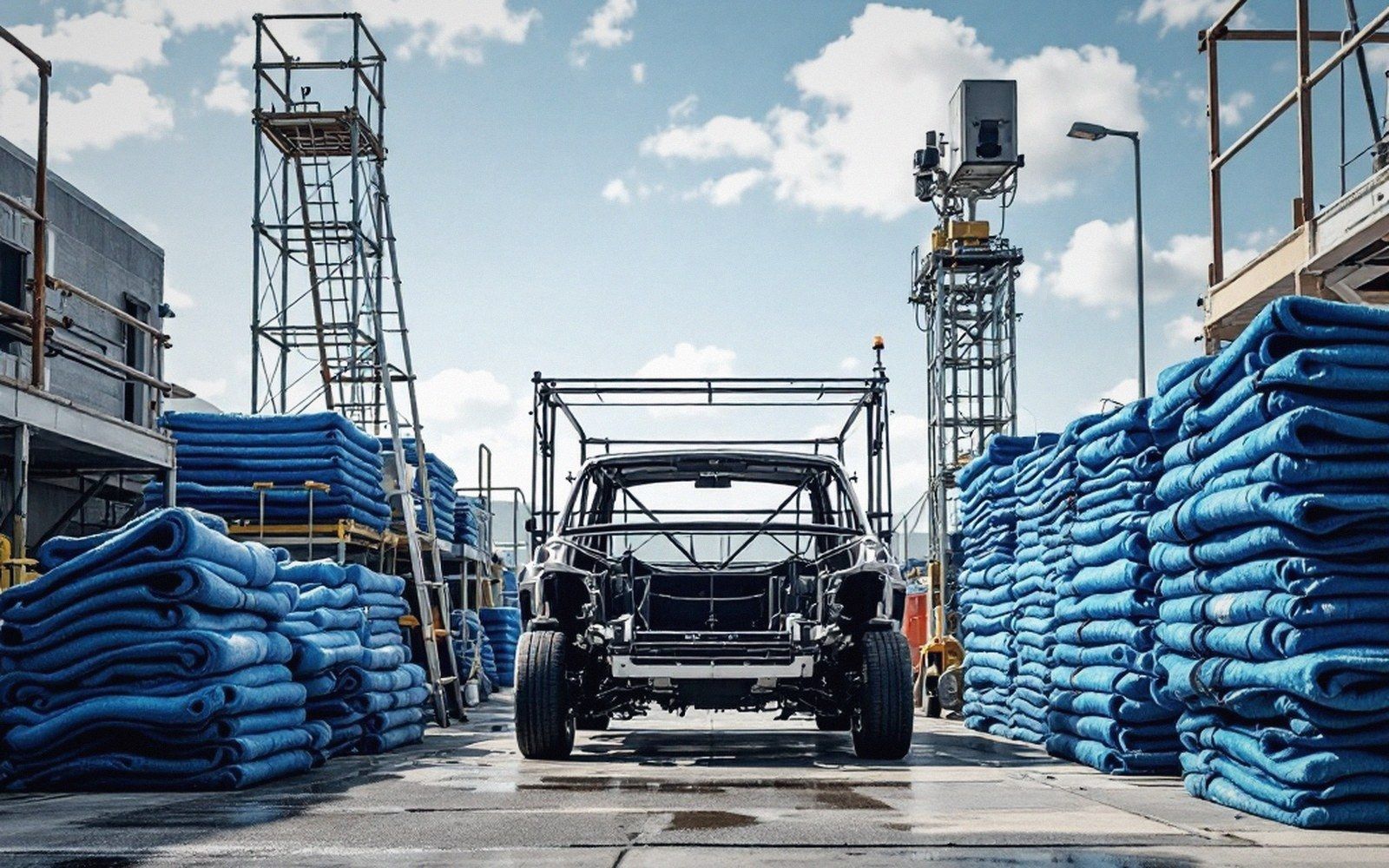
There are two broad ramp configurations that cover most of what has been shot. The pipe ramp — a ramp with a launching spine that catches under the sill of the vehicle and converts forward momentum into a hard tip — initiates a roll from a single contact point and tends to produce a tight, fast roll axis. The sled ramp, which is broader and angled to ride beneath the whole underside, gives the car a longer push and produces a more gradual tip. The choice between them is partly about the look — how fast the roll begins, how much air there is before the first impact — and partly about what the geometry of the specific location allows. A tight urban corridor has different ramp constraints than an open highway.
From the build
Key variables
Speed, Angle, and What the Ground Has to Offer
Approach speed is the first variable and the one that sets the range for almost everything else. Too slow and the car tips but recovers — a lazy lean rather than a committed roll, which looks unconvincing and may leave the vehicle balanced on two wheels in a condition nobody wants. Too fast and the car overshoots the ramp geometry entirely, meaning the roll initiates later, harder, and in a direction the rig was not built to manage. There is a window, specific to the vehicle, the ramp geometry, and the surface, within which the roll behaves as planned. The prep work is about finding that window and then making it as wide as possible.
Weight distribution compounds the speed calculation. A car with a heavy fuel cell shifted to one side, or ballast added to manage a particular roll direction, has a different tipping threshold than the same car in factory trim. Picture cars prepared for a roll are stripped of glass and doors either removed or hinged to release on impact, not because it looks dramatic but because a door that stays closed changes the structural collapse sequence and alters how the cabin holds shape around the performer. The cage — the internal roll cage welded to the car's frame — is the performer's survival space, and everything else about the preparation is designed to make that space predictable through the sequence of impacts.
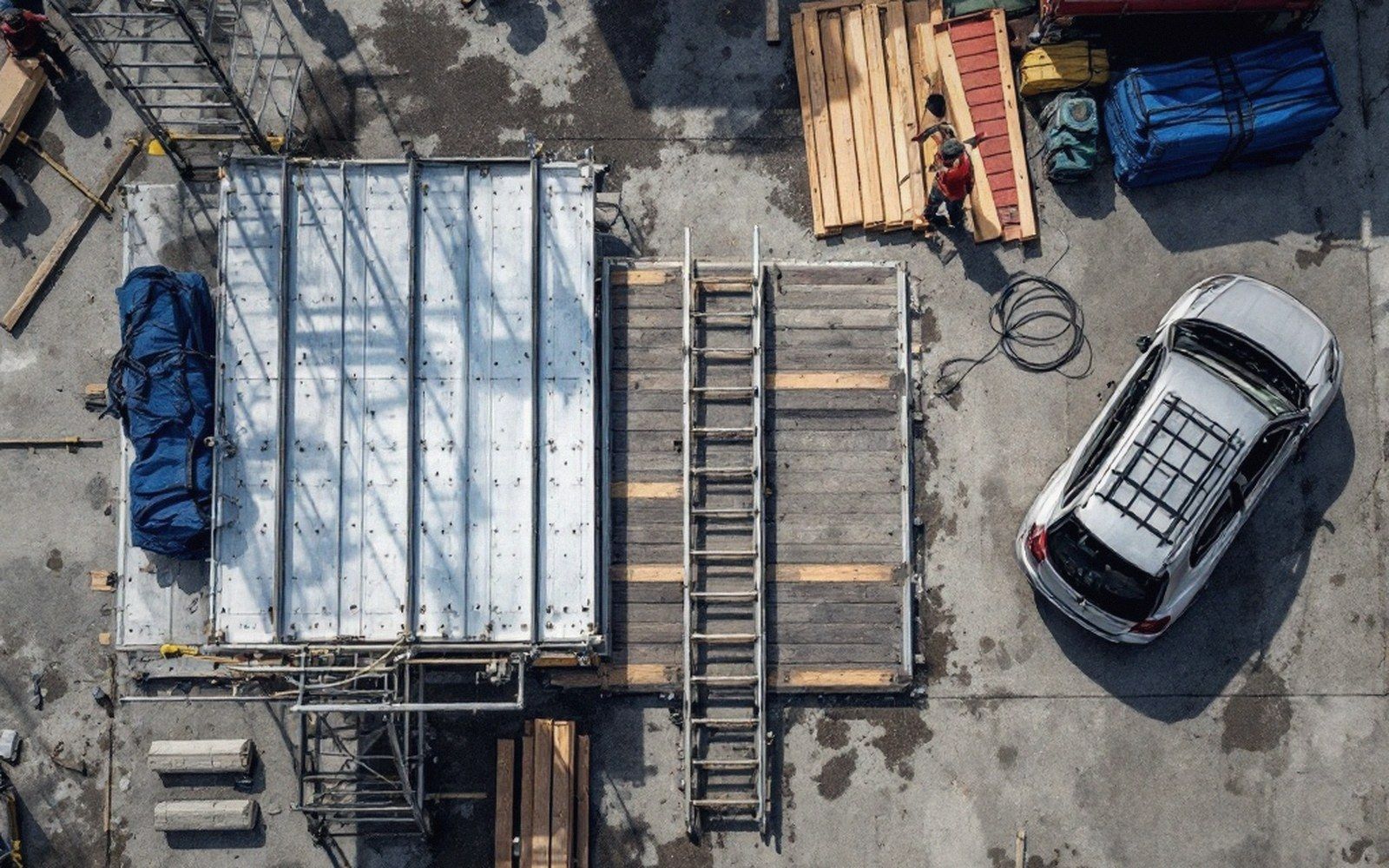
The ramp angle itself is a negotiation between what initiates the roll reliably and what the camera sees. A shallow ramp requires more speed to get the car over; a steep ramp requires less but gives the car more vertical energy, which means it may travel higher and come down harder. Production design sometimes wants the ramp visible in frame — dressed as debris, a curb, a piece of road damage — and sometimes wants it hidden entirely. When it is hidden, the geometry has to be arranged so that the car's approach path and speed are enough to get it onto the ramp reliably from an angle that looks natural. That is considerably harder than it sounds, and it is why the driver's line — the precise course across the ground — is marked and rehearsed at low speed long before the camera turns.
From the build
What the preparation looks like
The Performer Inside and the Plan for the Camera Outside
The stunt performer driving into a roll gag has almost no inputs once the car hits the ramp. The approach line and speed are set before contact; the hands stay on the wheel to maintain the approach, and then the ramp does what it does. What the performer can control is body position — braced correctly against the harness, head in a known relationship to the cage, limbs not in the path of the collapsing interior. The harness is multi-point and rigged to keep the performer in the seat through the inversion; a roll at any real speed involves at least one moment of negative g, and an unrestrained body in that moment becomes a projectile inside its own vehicle.
Communication is the part of this that is invisible on screen but is the thing the whole operation depends on. Everything is called — the approach, the go, the cut, the abort — through a headset that the driver can hear even through the noise of the gag. The abort call is defined before shooting and there is a point on the approach from which it can still be acted on, and a point past which the car's momentum has committed to the ramp. Everyone on the crew, including the people positioned outside the roll path with fire suppression and with a medical team standing immediately adjacent, knows which point is which. The verbal protocol is not a formality; it is the mechanism that makes a one-shot gag something a professional team can set up and execute without uncertainty.
The most reliable way to misread a roll sequence is to watch the car and ignore the ground.
Camera positions for a roll have their own logic. A car rolling toward camera reads the rotation; a camera too close gets destroyed. Most roll coverage uses at least one camera in a protected housing or positioned behind a substantial physical barrier, plus one or more cameras at angles that catch the airborne phase. The fastest part of the roll, the first rotation after tip, is also the most compressed in time — a full 360-degree rotation can take well under a second — which means high-speed cameras are standard, both to capture the peak moment in playable slow-motion and to give the coordinator clean slow-motion review footage immediately after the gag. What looks on screen like a long tumble is often far shorter in real elapsed time than viewers assume.
After the First Roll: What the Car Does Next
The first roll is the designed one. Everything after it is managed. A car with enough speed and mass will roll more than once, and each additional rotation disperses energy but also creates new impact points that are harder to predict exactly. The ramp and the approach geometry are calculated to put the performer through a defined number of rotations for a given location; the second and third rolls are accounted for in the choice of landing surface and in the defined stopping zone. That zone is not aspirational — it is the area that has been walked and inspected, that is free of fixed objects the car could strike, and that the medical response is positioned relative to.
Dirt and gravel surfaces slow a rolling car differently than tarmac. Grass offers less grip and produces more skidding between impacts; tarmac is harder and reflects more energy back into the structure on each hit. The surface choice is part of the geometry calculation just as the ramp angle is. Occasionally the surface is prepared — dressed gravel placed over tarmac, or a section of ground that has been broken up to reduce rebound — specifically to manage how the car's energy bleeds off across the roll sequence.
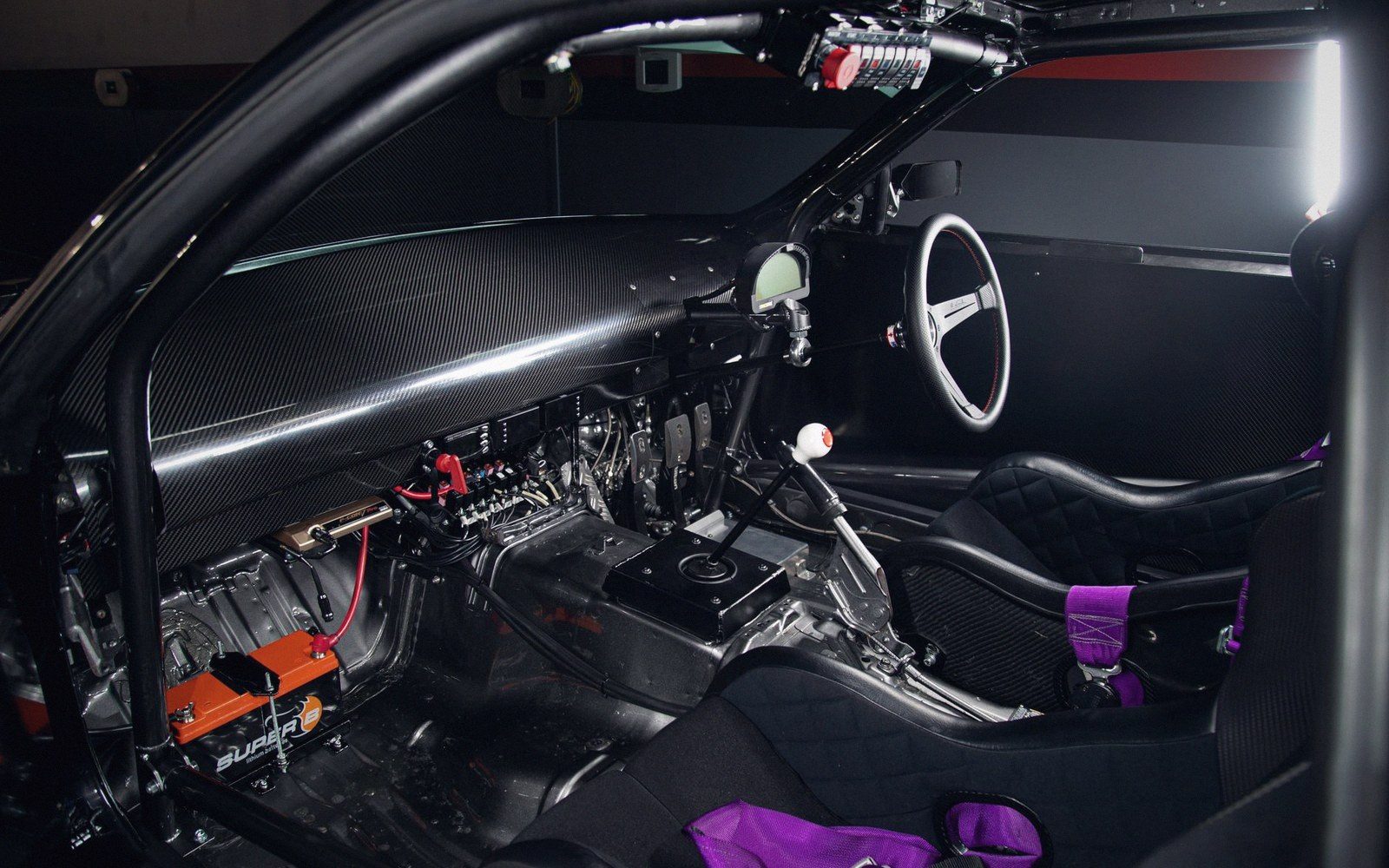
The finish state of the vehicle after a roll gag is also planned, in the sense that the cage is engineered to hold its volume through a defined worst case. Whether the car lands right-side-up or inverted for the final shot is discussed and, where possible, managed through approach geometry. A car that ends the gag on its roof requires a different extraction plan than one that comes to rest on its wheels. That extraction — how the performer gets out, and how quickly, and who is there — is prepared before the gag is run. The roll looks spontaneous because all the preparation happened somewhere the camera was not pointing.
Second Unit is an independent publication about stunt work and practical effects. It is not an awards body, production company, training provider or industry organisation.