Vehicles
The Pipe Ramp
- Manages
- Stored force under a wheel
- Turns it into
- A car into a trajectory
- In the hands of
- Special effects and the driver
A cannon that puts a car into the air — what it converts, and why the whole thing is about repeating it
A pipe ramp is not a ramp in the architectural sense. It does not slope. It fires. The device — essentially a pneumatic or hydraulic ram mounted beneath a vehicle — converts stored pressure into a very fast vertical impulse, launching the car sideways or end-over-end while the vehicle is still moving forward. The result on screen looks like a collision consequence; what it actually is, is a controlled mechanical event timed to within fractions of a second.
What the device actually does
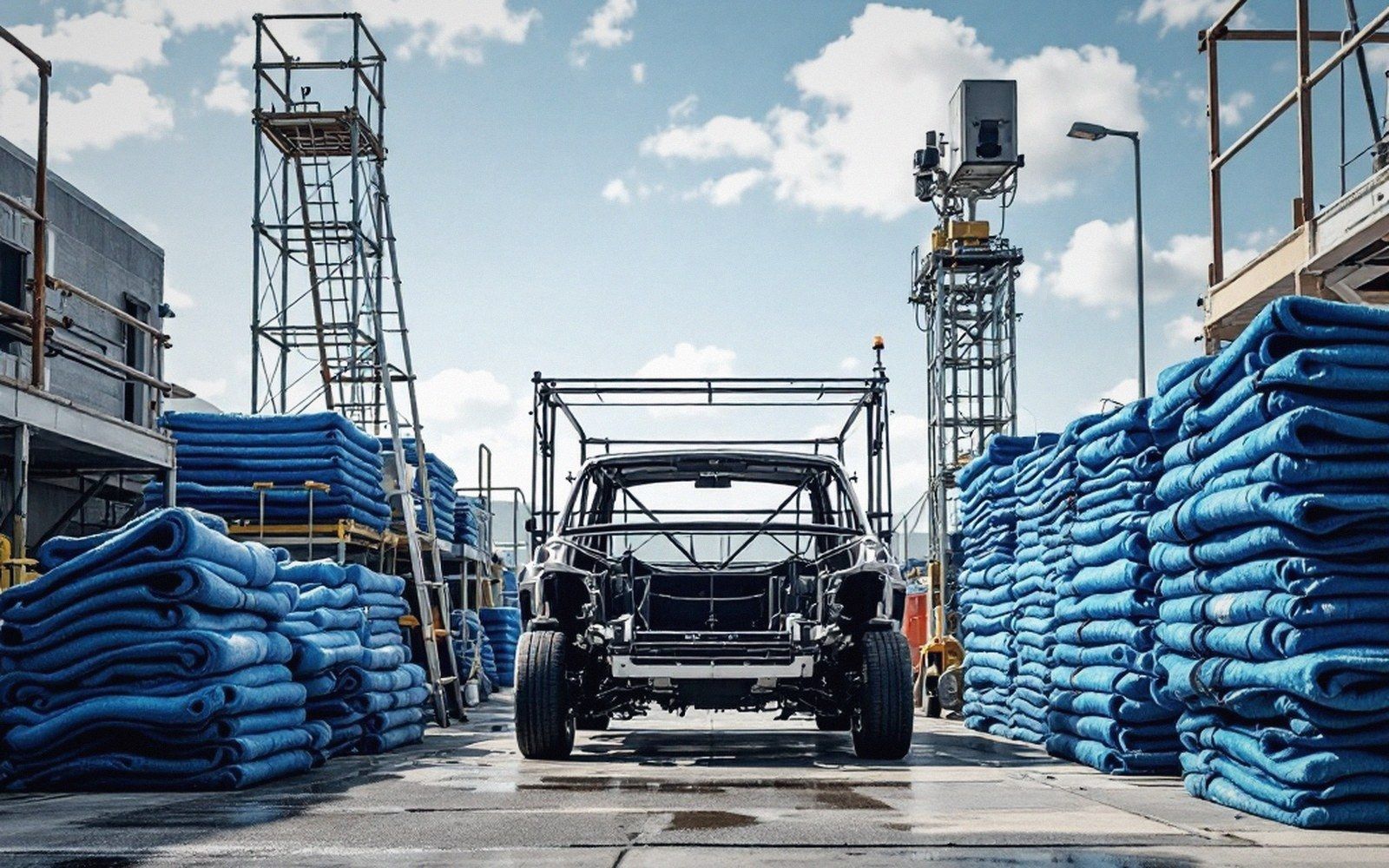
The mechanism sits low in the vehicle's chassis, often disguised inside the body panels so that the picture car reads as a normal production vehicle on camera. When triggered — remotely, by the driver or a coordinating signal — a ram extends against the road surface. The car's own forward momentum does a significant share of the work: the ram redirects that kinetic energy upward rather than adding raw lift from rest. What the coordinator is designing, at its core, is a force vector: how much vertical component, at what point in the travel, given how much forward speed.
That input speed is therefore the most critical parameter in the preparation. Too slow and the vehicle doesn't complete the rotation the sequence requires. Too fast and it travels further than the landing zone allows, or the rotation overshoots. Every pipe-ramp sequence begins as a calculation — desired rotation, landing position, camera angle — and works backward to an approach speed that makes all three true simultaneously. That speed is the number the stunt driver is given, and hitting it precisely is driving to a mark in its most consequential form: the mark is not a taped cross on the asphalt but a number on the speedometer, and missing it changes where the car lands by metres.
From the build
Key concepts
What repeatability actually means here
The phrase "one-take gag" gets used loosely, and a pipe-ramp sequence is often cited as an example. That framing misses the real engineering priority. A stunt coordinator preparing a pipe ramp is not trying to do it once and walk away; they are trying to build a system whose outcome is predictable enough that if the first attempt produced the wrong camera angle or the vehicle landed slightly out of position, they could make a controlled adjustment and go again. Repeatability here means understanding what each variable does so that the sequence can be deliberately modified — not merely survived.
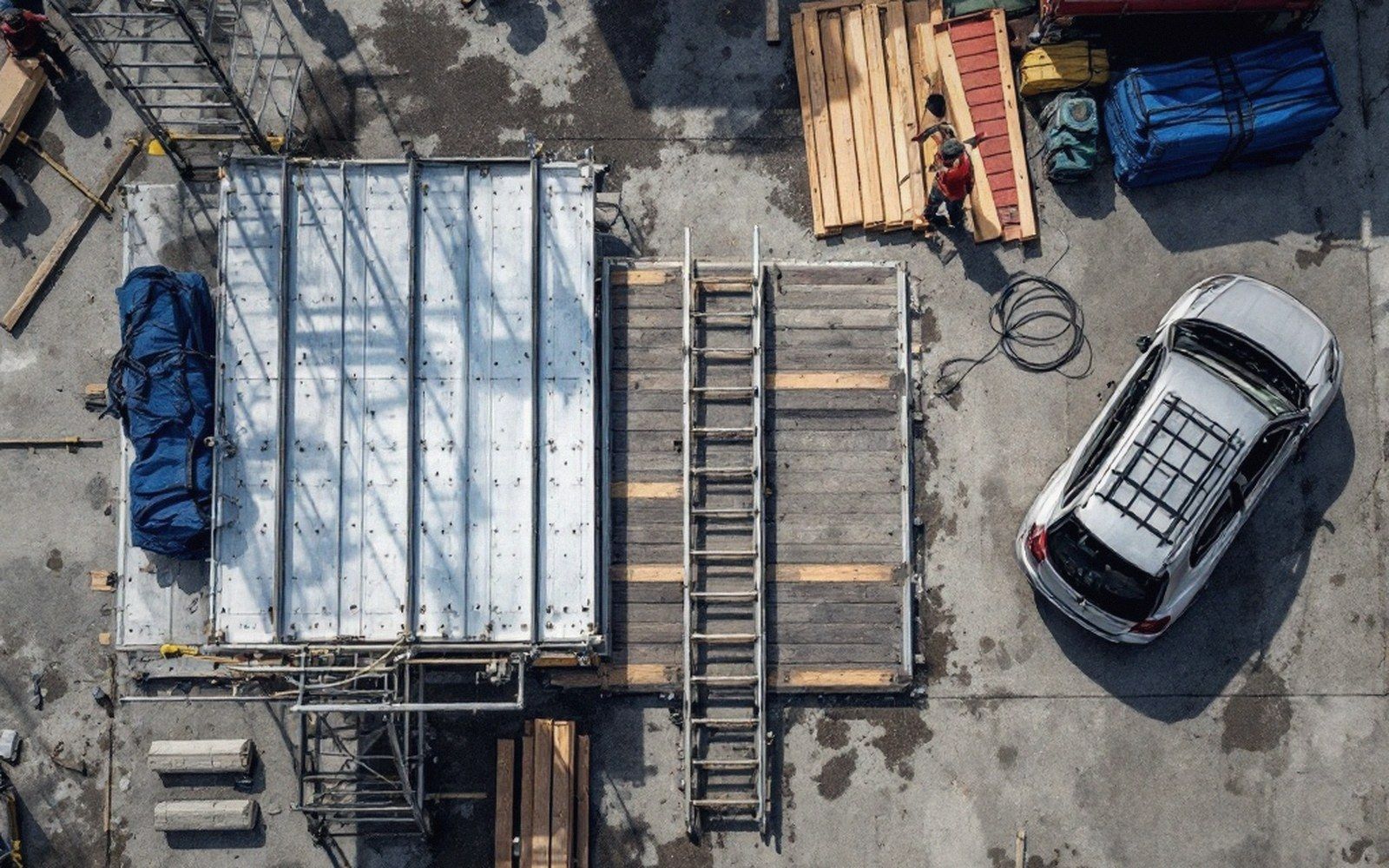
That is why the prep work is longer than the execution. The vehicle is ballasted and rigged so the weight distribution matches the calculation. The surface conditions — tarmac, gravel, wet — change the approach friction and therefore the effective speed at contact. The landing zone is prepared: a box rig or pad stack is positioned for the specific trajectory, not for a general zone. Extinguisher crews and medical personnel are in position before the first trigger test, and the abort protocol is established the same way it would be for any other gag — verbal, with clear roles and no ambiguity about who calls the stand-down.
What the pipe ramp makes visible is something true of most vehicle work but usually hidden beneath the spectacle: the impressive part is not the moment of launch. The impressive part is that a coordinator can stand beside a car, look at a stretch of road, and predict with high confidence what that car will look like when it comes to rest forty metres away — and then build the conditions that make that prediction correct. The pneumatic ram is the simplest component in the gag. Everything else is the engineering.
Second Unit is an independent publication about stunt work and practical effects. It is not an awards body, production company, training provider or industry organisation.