Falls
Descenders and Decelerators
- Manages
- Descent rate on a line
- Turns it into
- A drop into a curve
- In the hands of
- The rigger at the drum
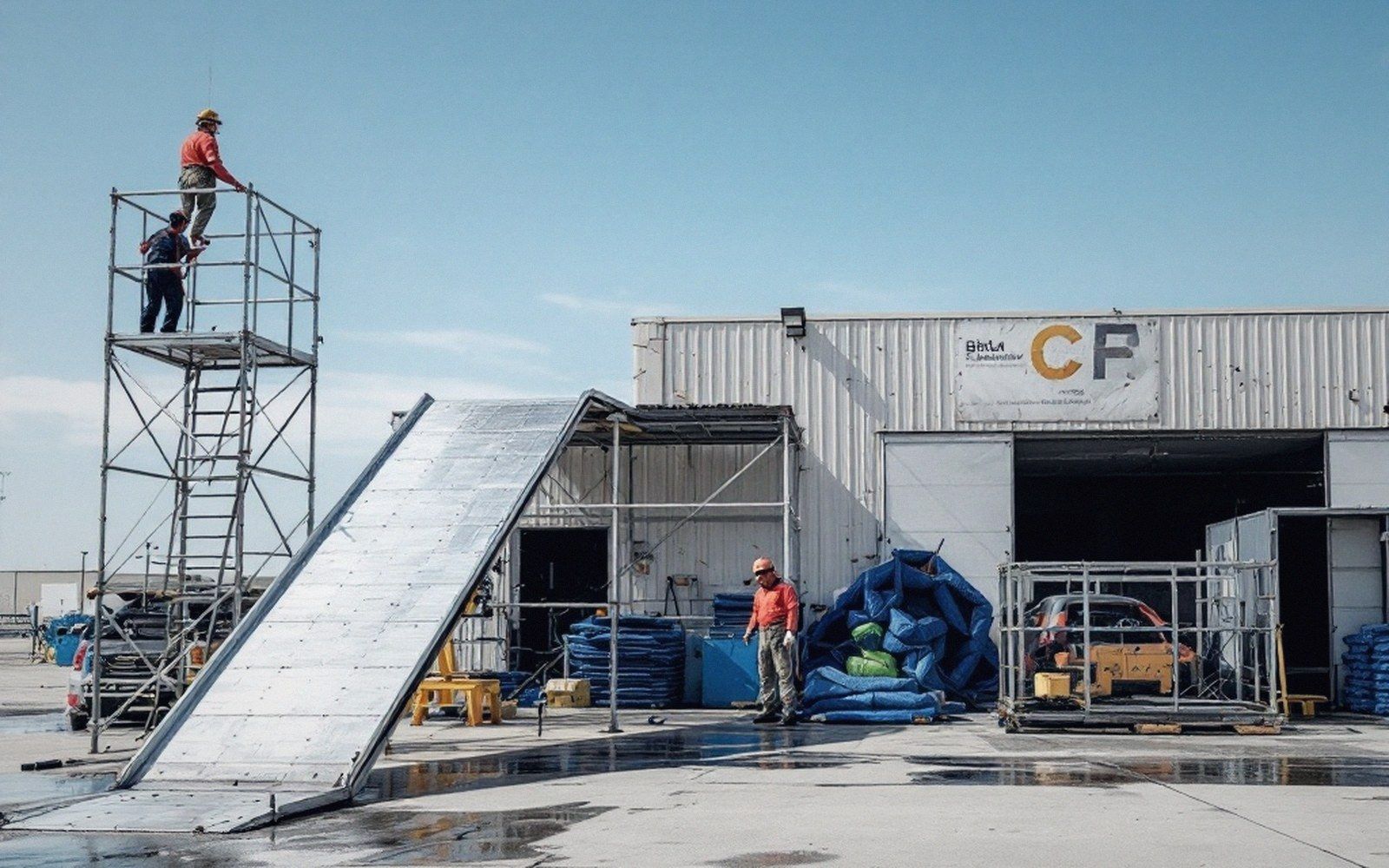
The wire holds you up; the descender holds you back. Most of the engineering in a controlled descent lives in the last ten feet.
The Drum and What It Governs
A descender is a braking device — a friction or mechanical drum through which the wire runs on its way down. The performer's weight drives the descent; the drum resists it. What the coordinator is designing is not the fall itself but the rate of it: a speed that reads as genuinely uncontrolled on camera while remaining genuinely controlled in fact.
The drum can be set to produce a roughly constant velocity through the main body of the drop. That consistency is part of the safety logic. A performer falling at a known, practised speed arrives at the bottom of the drop in a known, practised state — weight forward or back as rehearsed, limbs where the plan put them. Variation is the enemy. An unintended acceleration mid-drop compounds into every decision made in the seconds before impact, and the performer is the last person who can correct for it.
Friction descenders are mechanically simple: the wire wraps around a drum or series of plates, and the resistance of that wrap absorbs kinetic energy as heat. Rack-and-pinion or hydraulic variants give finer control and allow the rate to be adjusted during the drop rather than only before it. The sophistication of the device is typically matched to the complexity and height of the gag — a two-storey window exit needs less engineering than a drop from a burning building's roof.
Why the Last Ten Feet Change Everything
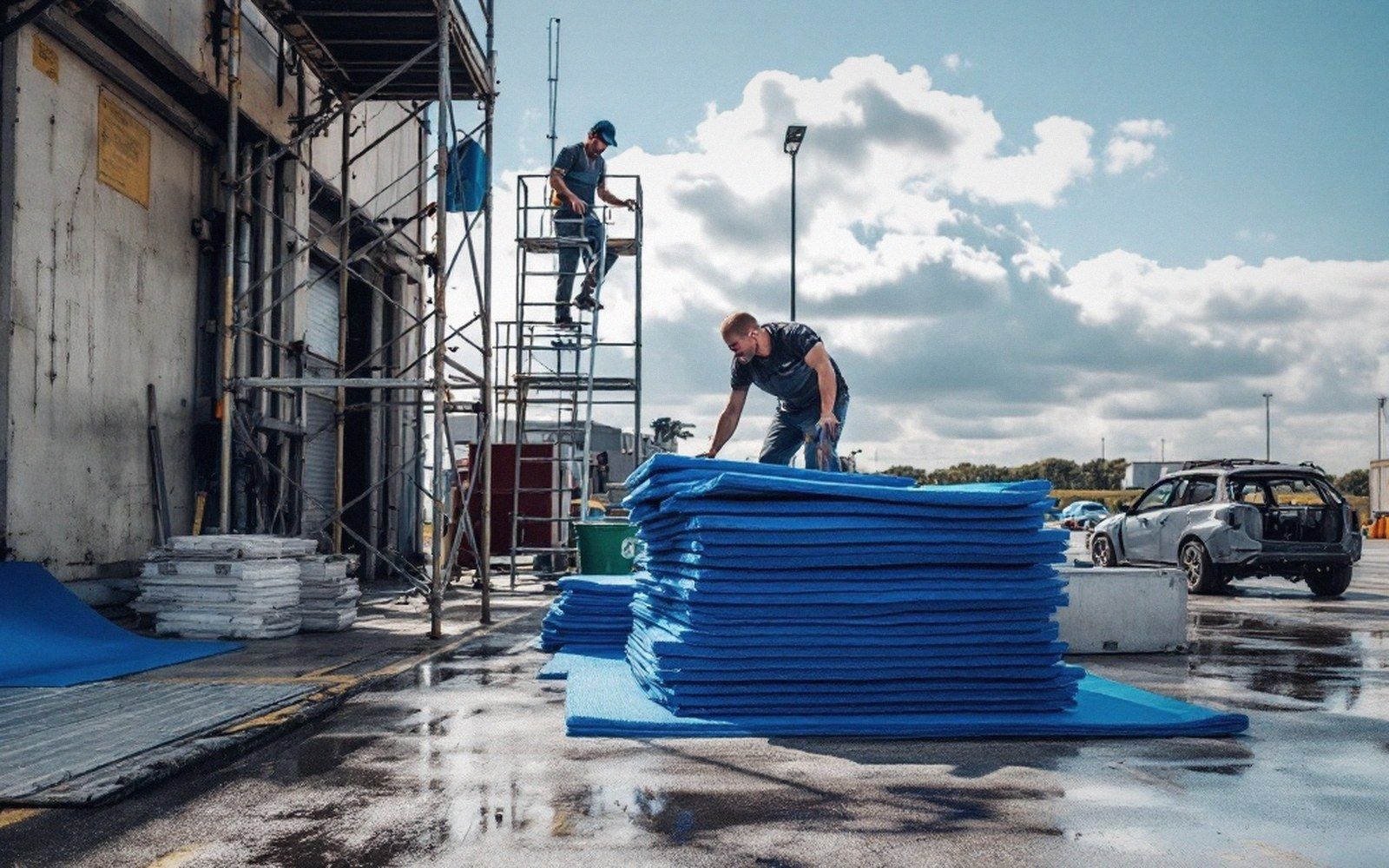
Constant velocity is fine for most of the fall. It is a problem at the bottom of one. Arrive at the landing zone at full descent speed and the performer absorbs that stop through their body — or the pad does, if a pad is present, but the pad's job is to spread a deceleration, not to eliminate one entirely.
The answer is a controlled bleed-off: the drum's resistance increases progressively through the final portion of the descent so that the wire is doing more of the stopping work, not the landing surface. How much of that braking happens in the wire versus at the pad is a calculation worked out in rehearsal. What the pad is actually doing and what the descender is doing overlap in that last metre, and the balance between them is agreed before the camera rolls.
The profile of that deceleration — when it starts, how steep the curve is — is dialled in during the low-level rehearsal passes that precede any full-height attempt. The coordinator and the rigging team are watching not the drama of the fall but its ending: is the performer's velocity bleeding off at the right point, at the right rate? The performer is developing muscle memory for what the slowdown feels like so that it does not come as a surprise at sixty feet.
From the build
How the deceleration works
- Drum (friction or mechanical)resists the performer's descent by absorbing kinetic energy; sets and governs drop speed
- Constant-velocity phasethe main body of the fall; kept consistent so the performer arrives at the bottom in a known physical state
- Deceleration profilethe progressive increase in braking resistance through the final portion of the drop; dialled during rehearsal
- Pre-loadwire tension established before release so the transition to descent is smooth rather than a sudden jolt
There is also a pre-load consideration. The wire needs to be taut before the drop begins; a slack wire snapping to load is a jolt that registers in the body and in the camera, and it introduces an unpredictable starting condition into a system built around predictability. The rigging will be set so that the load transfers smoothly from the rigging point to the descender at the moment of release.
None of this is visible in the finished cut. What the editor has is a body falling, a landing, and a performer who gets up. What the editor does not have — because the rigging team spent several days making sure of it — is the frame where the deceleration started too late, or the moment where the wire went slack. The descender's job is to leave no evidence of itself at all.

From the build
Key moments in the sequence
- Low-level rehearsal passesfull-drop deceleration profile tested at reduced height before any full-height attempt
- The landing zone balancehow much stopping work is done by the wire versus the landing surface; agreed before the shoot day
- Evidence of absencea correctly run descender leaves nothing visible in the cut