Falls
What the Pad Is Actually Doing
- Manages
- Impact at the end of a fall
- Turns it into
- A hard stop into a long one
- In the hands of
- Riggers and the pad crew
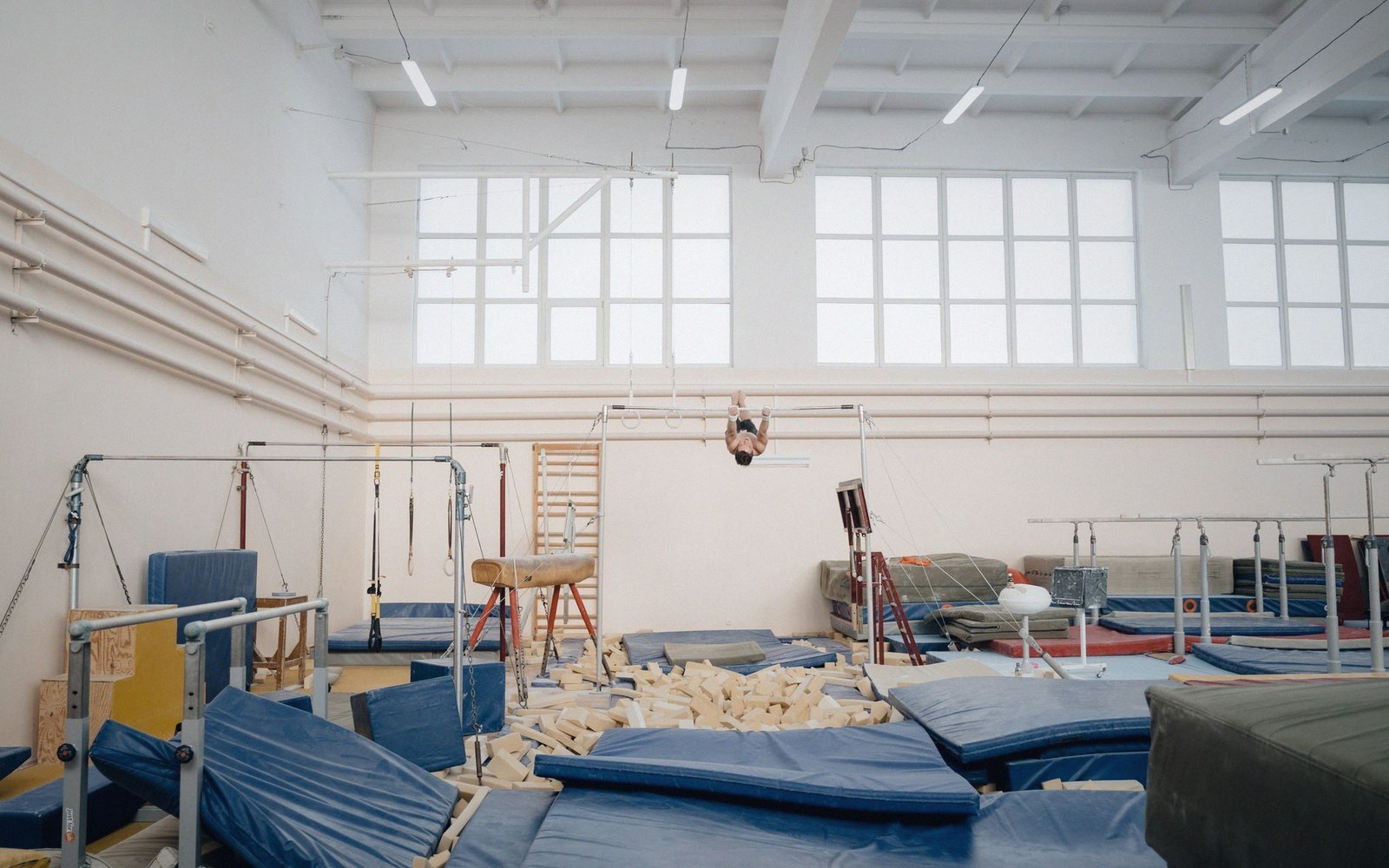
A mat stack is not a cushion. It is a deceleration machine, and the depth of it is the entire engineering decision.
The Physics You Are Trying to Defeat
When a person falls, gravity does one thing: it accelerates them downward at a steady rate. By the time they have dropped six feet — a relatively modest fall by film standards — they are moving at something close to twenty feet per second. By twenty feet, that figure has nearly doubled. None of that velocity is the problem. Velocity is not what injures people. What injures people is the rate at which velocity becomes zero: deceleration, specifically the peak force it generates at the moment of stop. A body hitting a concrete floor from ten feet does not fail because it traveled ten feet. It fails because the stop happened in a fraction of an inch and all of that kinetic energy had nowhere to go except through the skeleton.
The pad's only job is to give that energy somewhere to go. Every inch of depth added to a mat stack is an inch over which the stop can be distributed. Double the stopping distance and you halve the average deceleration force. Triple it, and you cut it to a third. The physics here is not subtle — it is the same principle that makes crumple zones work in automobiles and that sits behind the design of cardboard crash boxes. The mat stack is an architecturally simpler version of the same idea: build a structure that collapses predictably, stretch the stop over as much vertical travel as the budget of space allows, and keep the peak force below the threshold that causes injury.
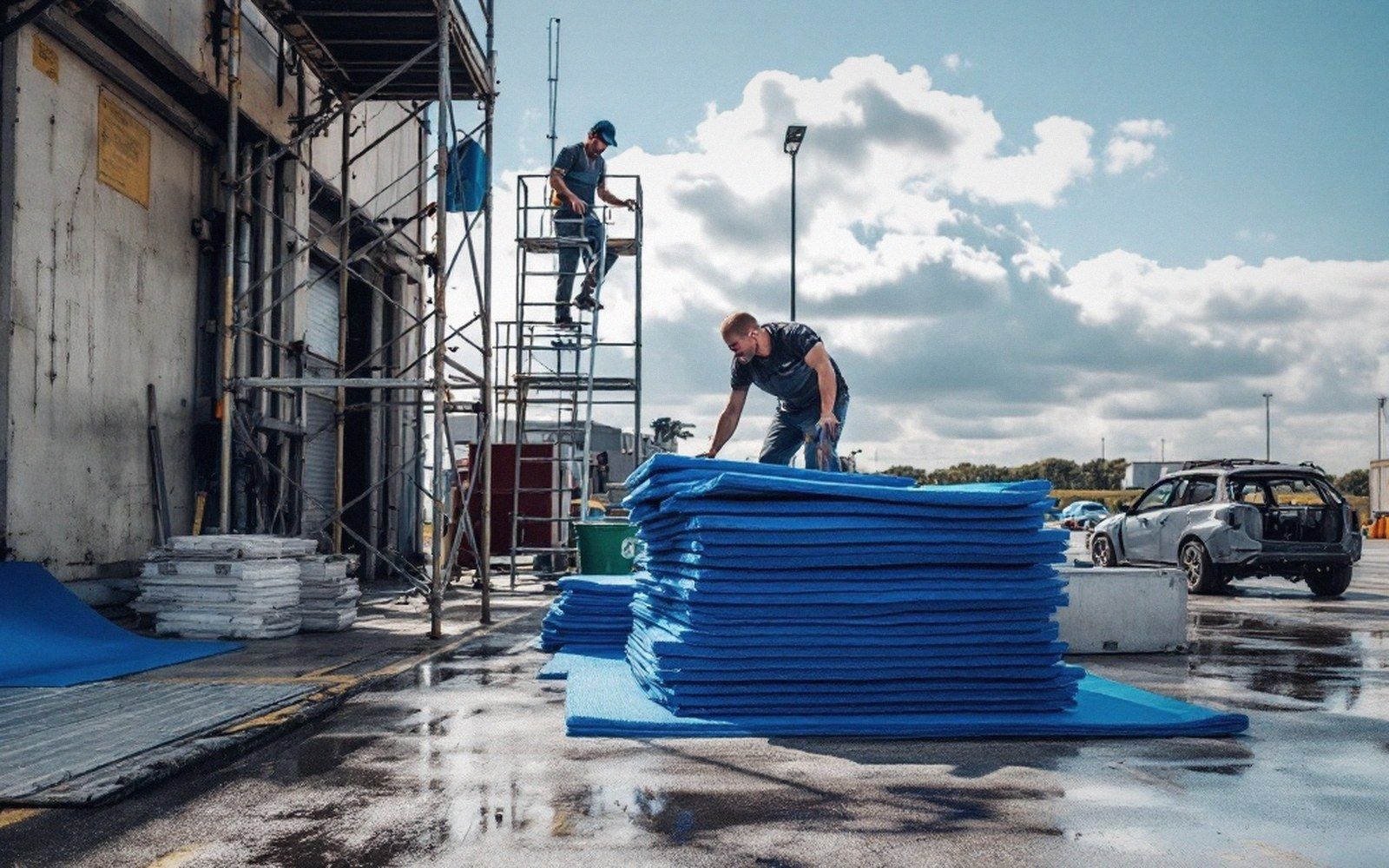
That threshold is not a single clean number. It varies by body region, by the angle of impact, by whether the performer's core is braced, by age, by what a prior injury history looks like for that specific person on that specific day. The coordinator and medic together — not the director, not the producer — are the people who define the acceptable envelope for a given performer doing a given gag. The pad design follows from that conversation, not from a chart on a wall.
From the build
The deceleration chain
Depth First, Then Everything Else
A mat stack is rarely a single object. In practice it is a layered system, and the layers are chosen deliberately. A common arrangement puts firm, high-density foam at the base to provide a stable foundation and prevent what practitioners call bottoming out — the catastrophic failure mode in which the performer passes through all available give and meets something rigid. On top of that sits progressively softer material: medium-density cells that begin compressing early in the descent, high-loft foam toward the top that catches the initial contact and starts transferring energy before the body sinks into the denser layers below. The sequence matters. Put the softest material at the bottom and it collapses immediately, leaving the denser layer to do a hard stop anyway. The stack has to work in order, from first contact downward.
Total depth is the headline specification. For falls in the range encountered on a working film set — say, a practical drop from a platform, stairs or a practised elevated position — stunt coordinators typically build stacks deep enough that even at the highest anticipated entry velocity, the performer reaches the base layer with most of their energy already absorbed, travelling slowly enough that the final deceleration is gentle. The stack is sized to the fall, not chosen from a catalog. A three-foot drop and a twenty-foot drop are not the same conversation, and a twenty-foot drop with a wire assisting deceleration on the way down is a different conversation again, because the wire has already done work before the performer reaches the surface.

Lateral spread matters nearly as much as depth. A narrow stack is a target, and targets can be missed. Part of the rehearsal process — walked at reduced speed and checked repeatedly before anyone goes at full commitment — is confirming the relationship between the performer's body in space at the moment of release and the centre of the mat. A gag is rarely designed so that the performer must hit a small window perfectly; the stack is built wide enough to accept the realistic scatter of a human body in motion, then the rehearsal process tightens that scatter toward the centre through repetition. A stunt performer does not suddenly attempt a gag cold. By the time camera is rolling, they have been to the mat many times, and the path is grooved. But the mat is still wide, because grooved is not perfect.
From the build
Geometry of the decision
What the Stack Tells the Coordinator
The mat configuration is also a diagnostic tool. How the foam compresses — where the impressions appear, how deep they go — tells the coordinator what actually happened on a given take and whether the landing was what they expected. A clean central impact with uniform compression across the expected body surface is confirmation. An off-centre crater, or a deep impression in one corner, opens a conversation about what shifted in the air. In a sequence designed to be shot more than once, every take's landing is assessed before the next one proceeds. This is part of why the medic and the coordinator are both present and both watching every attempt, not just the ones that look wrong to outside observers.
The stack also interacts with everything around it. Rigging points overhead, camera positions, set dressing and lighting are all established in relation to where the mat sits, because the mat cannot move without renegotiating all of those relationships. A mat hidden beneath set dressing — dressed to look like a floor, a roof, a forest clearing — is still structurally the same device, but it requires the set decorator and the coordinator to have agreed, before construction, exactly what is set dressing and what is safety apparatus. That line cannot become ambiguous during a shoot day.
When a person falls, gravity does one thing: it accelerates them downward at a steady rate.
The Mistake That Looks Like Caution
There is a failure mode specific to padding that deserves its own paragraph. More foam is not always better foam, and a very deep, very soft stack can create problems of its own: the performer sinks unevenly, a shoulder or ankle catches on a seam between pads, the surface moves laterally under impact and throws the body into an unintended orientation, or the stack absorbs so much energy so quickly near the top that the performer effectively stops in mid-stack with their legs still traveling and their torso already braked, creating a jackknife force across the lower spine. These are not theoretical concerns. They come up in the design process and they are why the coordinator specifies not just depth but density gradient, cover materials, the method by which individual pads are joined, and exactly how the stack is positioned relative to the fall line.
More foam is also not a substitute for the work done before the fall. The rehearsal at reduced speed, the count that everyone on set has agreed to, the wire work that may be controlling the body's orientation on the way down — all of that exists to put the performer on the mat in the right attitude at the right velocity. The pad does its job only when everything upstream of it has done its job. Design it for the expected landing, not the worst imaginable one; build in margin, yes, but build in the right margin. A stack designed around a nightmare scenario that can only occur if everything else has already gone wrong is not a safety system — it is anxiety architecture, and it usually handles the actual gag less well than a stack that is correctly matched to the real parameters.
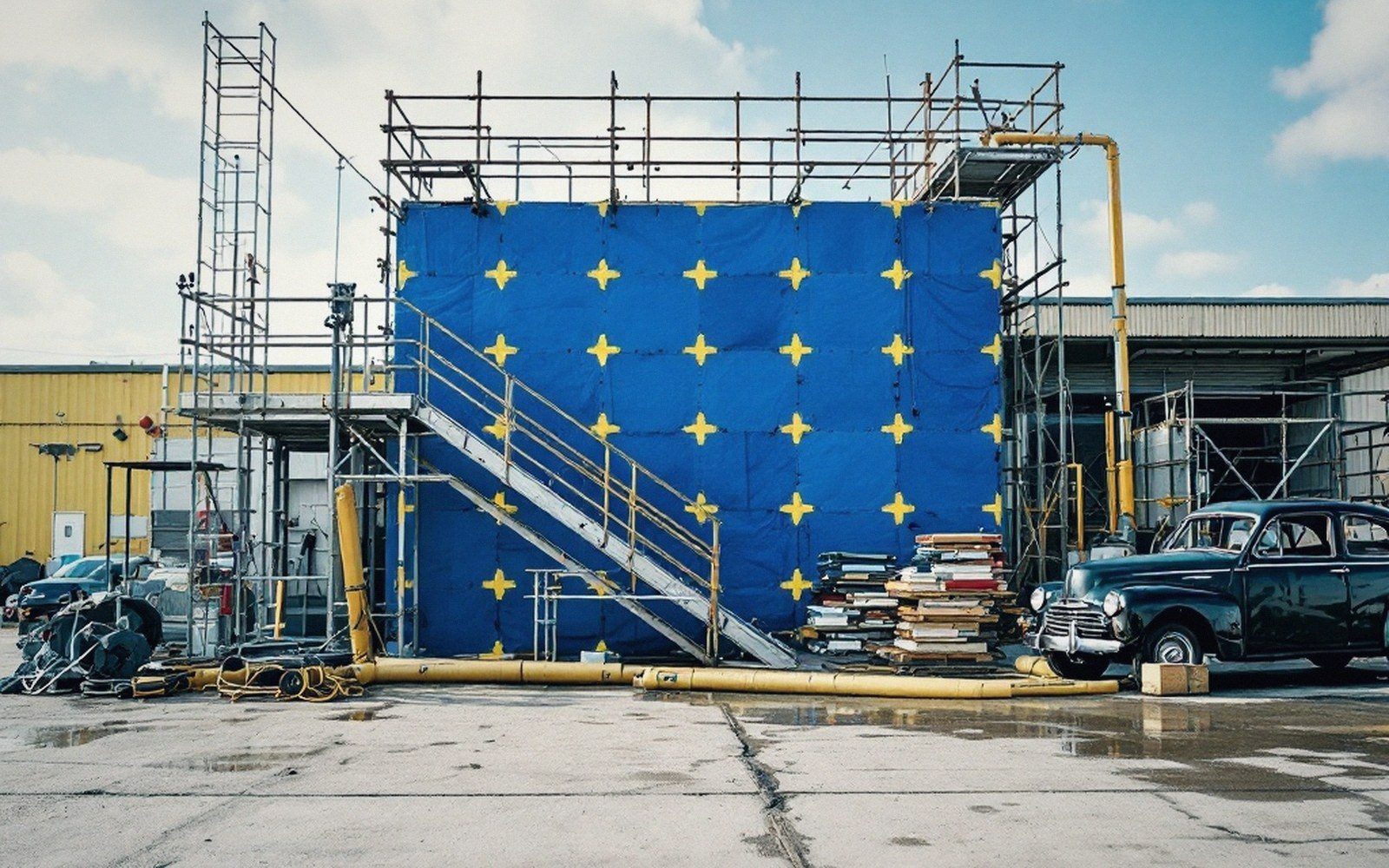
The deep, correctly-graduated mat stack works because it trusts the rest of the system. That trust is what the rehearsal process earns, what the count protects, and what the coordinator's presence on set maintains. The pad is the last line, but it is not meant to be the only line. It is the end of a chain that begins days before the camera arrives. What makes it work is everything that happened before it was needed.