Falls
A High Fall Is a Machine You Land Inside
- Manages
- Sixty feet of freefall
- Turns it into
- Velocity into a designed collapse
- In the hands of
- Coordinator and rigging team
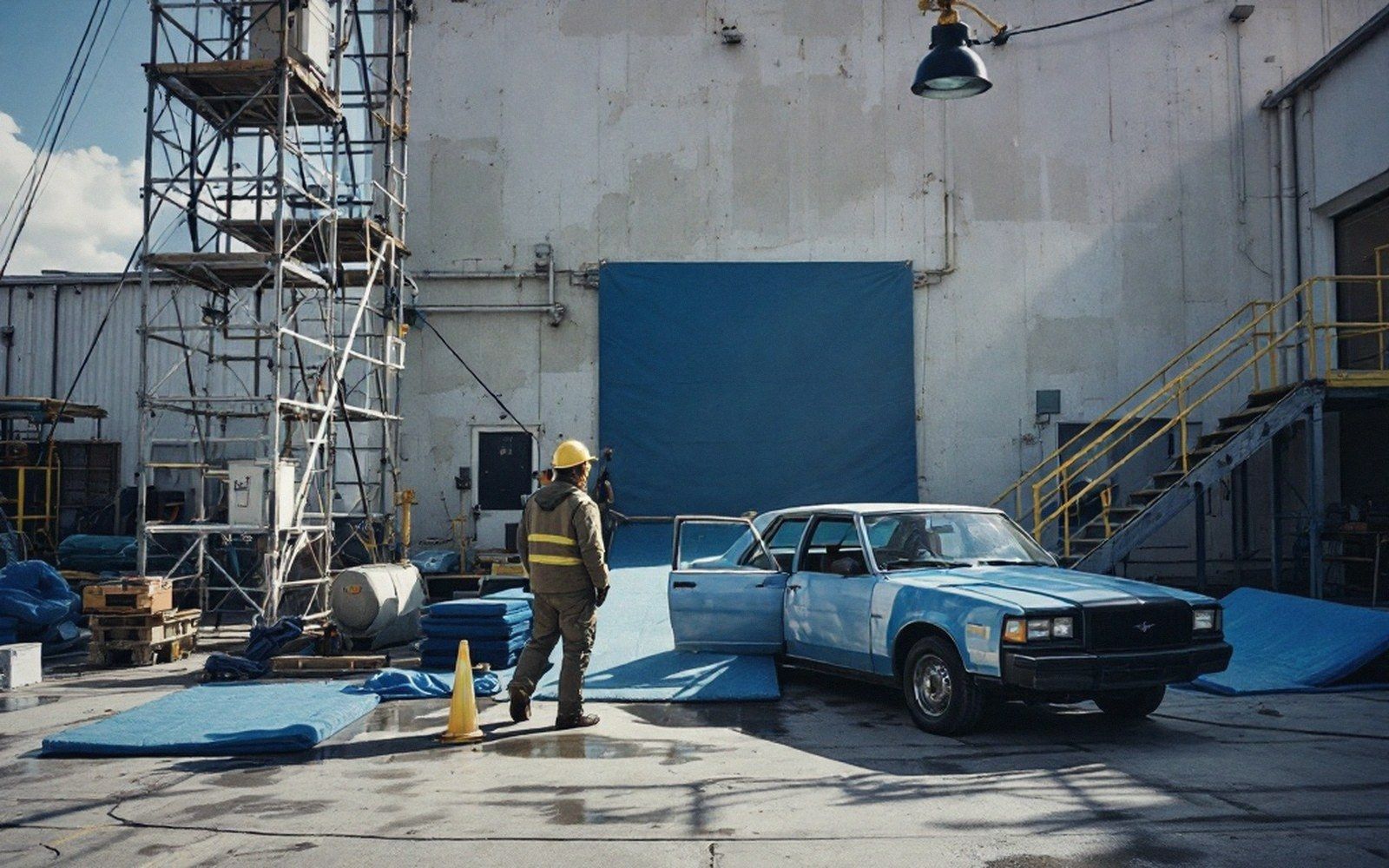
Sixty feet takes about two seconds. The work that makes those two seconds survivable spans most of a week.
Before Anyone Climbs Anything
The sequence starts not on a rooftop but in a production office, usually several weeks prior, when the stunt coordinator reads the script — or more precisely, reads past the script and into the physics. A line that says "MARCUS falls from the building" is not a description of a gag; it is a premise. The coordinator's job is to convert that premise into a structured set of decisions, each of which constrains the next.
First: how far? The camera's need and the performer's safety do not automatically align. A director wants height in frame because height reads as danger; the coordinator wants to know exactly how many feet are on offer because every additional ten feet adds velocity, changes the bag specification, and extends the time needed to rehearse. Sixty feet is commonly cited as a significant threshold in high fall work — not an absolute limit, but a height at which the arithmetic becomes demanding. At sixty feet, freefall runs approximately two seconds, and impact velocity is around sixty feet per second. The breakdown that comes back from those conversations is not a creative document; it is a technical one.
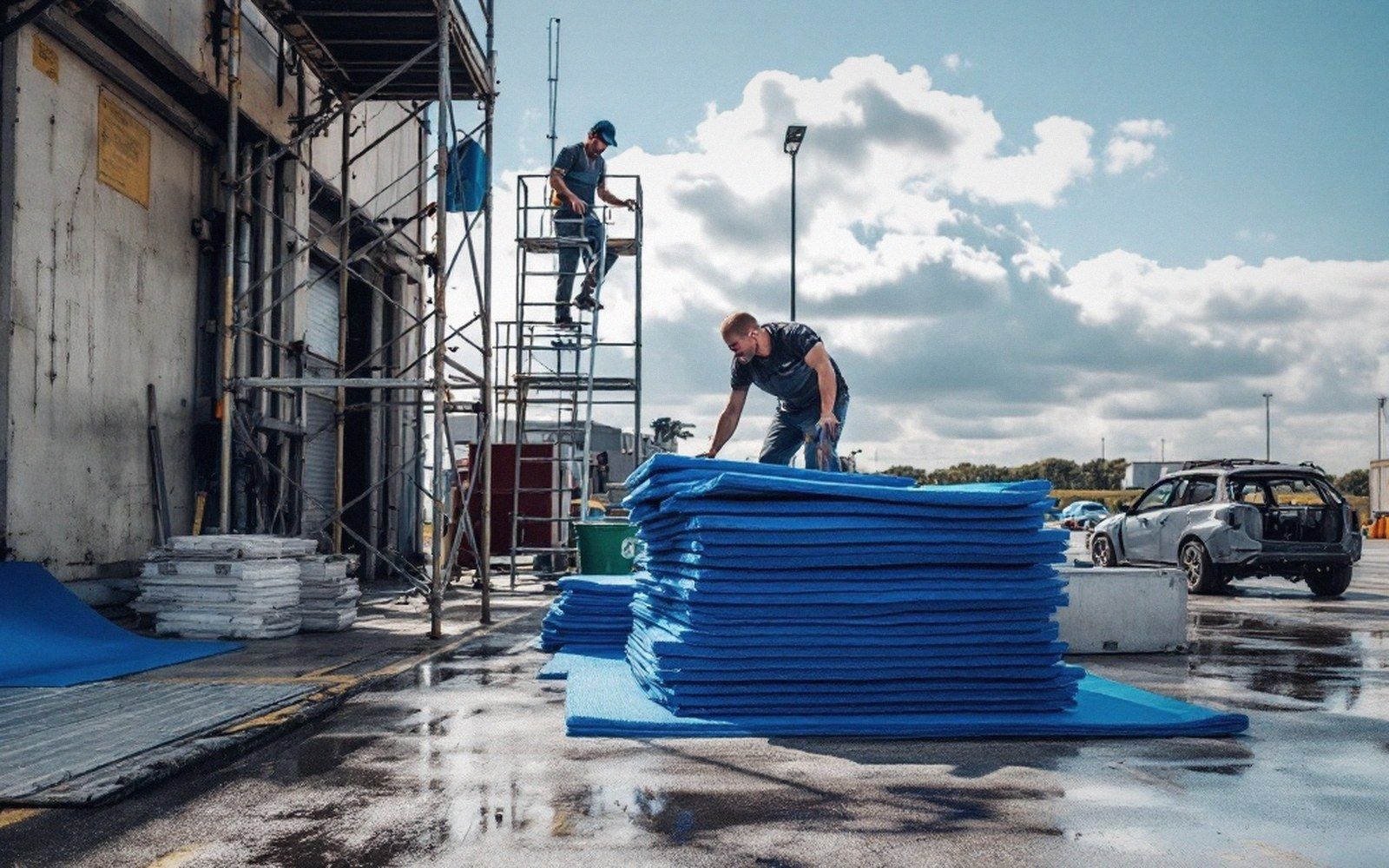
Second: what does the landing surface have to be? This is the question people outside the work consistently underestimate. The airbag, the box rig, the mat stack — these are not interchangeable; each is suited to a specific range of heights, fall angles, and body positions. A high fall at sixty feet or beyond is almost always going to an airbag, because the bag can be tuned for the deceleration profile needed. But an airbag at that height is not a thing you rent and place; it is a system that gets sized, positioned, loaded to a specific pressure, and tested before a person goes anywhere near it from altitude. The coordinator works backward from the landing to set every constraint above it.
Third: what is the departure? The step-off is arguably the moment of highest risk in the entire operation, and it is almost never the part that looks most dramatic on screen. A performer stepping off a ledge at sixty feet has committed; the body position in the first half-second governs the body position on impact. Rotation acquired early cannot easily be corrected. So the departure is choreographed precisely — which foot, which shoulder leads, which direction the head tracks — and then rehearsed at lower height until it is automatic.
From the build
Key figures
The Six Days, in Order
Nothing about this week is glamorous, and that is exactly the point.
Day one or two is the survey. The coordinator and the key members of the stunt team walk the location — or the set, if it is a stage build — and map it against the plan. Is the landing zone level? Can the bag be brought to that position without the rigging compromising the camera line? Are there structural points suitable for overhead anchorage if a wire is involved? What are the sight lines for the safety team? Where does the medic stand? The survey answers questions the office plan could not, and it often sends the plan back for revision.
The bag goes in next. Sizing and positioning an airbag for a high fall is a process that takes a full crew day. The bag has to be centered under the departure point with an accuracy that accounts for any lateral drift the performer might acquire — the target is large enough to be forgiving of small variables, but small enough that the centering cannot be casual. Access paths for the extinguisher team — not applicable here, but the principle of maintaining clear lanes to the landing zone — are walked and marked. The bag is inflated to working pressure, checked, and left to stabilize overnight if time permits, because large air structures can shift.
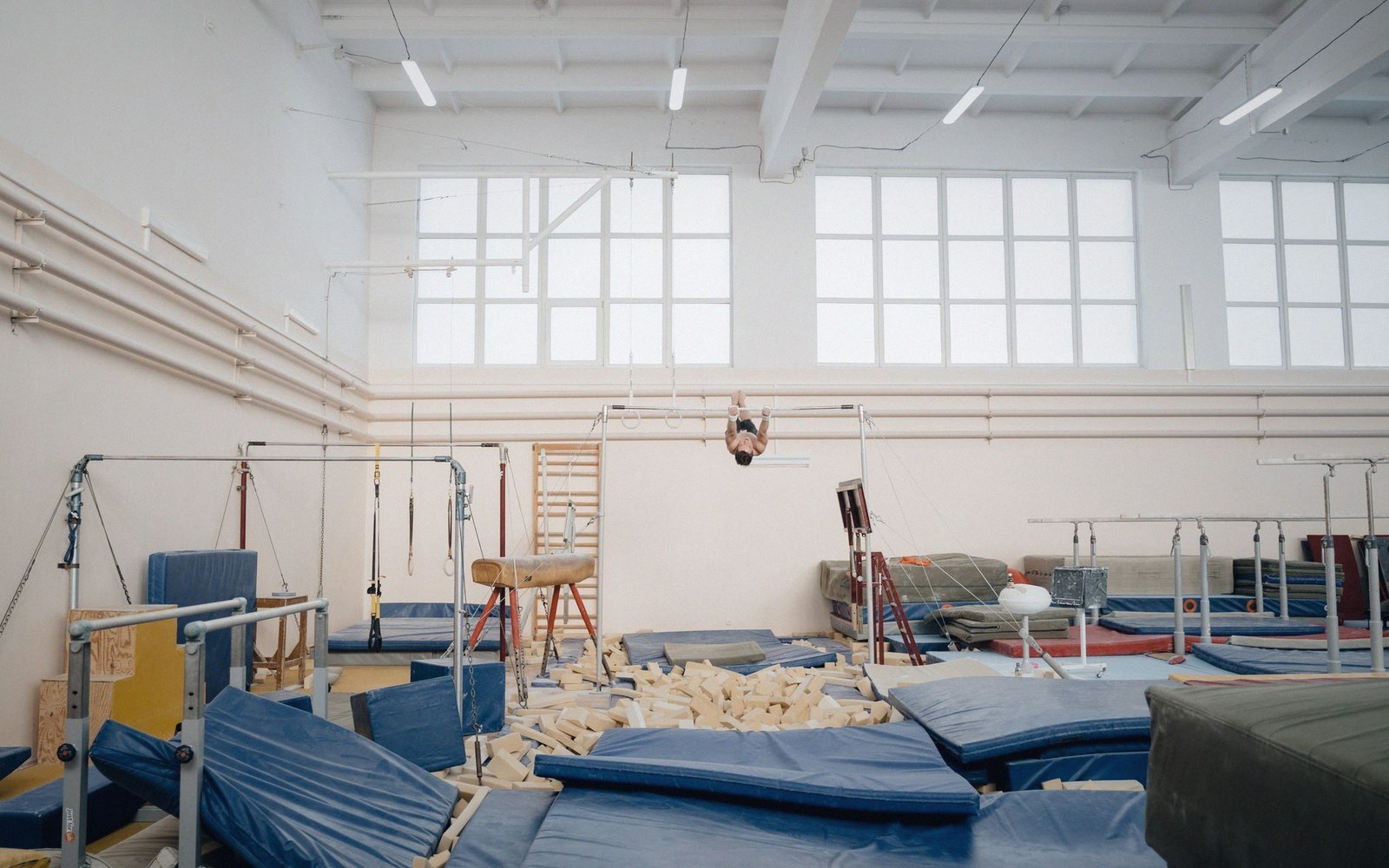
Rehearsal at half the height is where the machine gets its final calibration. The performer works the departure from a lower platform — often thirty feet for a sixty-foot fall, sometimes less for initial runs — taking the same number of steps, the same body rotation, the same arm position, and hitting the bag in the same landing posture they will use on the day. This is not a confidence exercise, though confidence is a legitimate benefit. It is a data-gathering exercise. Each rehearsal rep is read by the coordinator: was the body square at contact? Did the arms move correctly? Is the rotation consistent? The answers determine whether the performer goes up, or whether another half-height run happens first.
From the build
How the week runs
- Survey of location/setsight lines, landing zone, rigging anchor points, medic position
- Bag installation and pressurizationfull crew day, left to stabilize if schedule allows
- Rehearsal at half heightdata-gathering on body position and departure consistency
- Full-height low-speed walkthroughgeometry and camera-line verification
- Shooting daybag confirmed at pressure, safety marks walked, abort call established before first rep
There is usually a full-height rehearsal at reduced velocity — a slow-motion walkthrough at the actual height, with the performer lowered under control rather than falling. This sounds unnecessary, but it is not: it lets the team verify the camera sight lines and the fall geometry at the true distance, without the consequences of an uncontrolled full-speed attempt.
By the time shooting day arrives, the coordinator has watched the fall — or something very close to it — happen many times. The bag is at pressure. The safety team knows their marks. The medic is positioned. The abort call is established.
A line that says "MARCUS falls from the building" is not a description of a gag; it is a premise.
The Two Seconds
The fall itself is, genuinely, the least technically interesting part of the operation, which is the inversion that surprises people when they first encounter stunt work up close.
What is happening during those two seconds is almost entirely determined by what happened in the six days preceding them. The coordinator cannot intervene once the performer has stepped off. The rigging team cannot adjust the bag. The only variables still in play are the ones the performer controls with their body, and those variables have been trained to near-automaticity. The two seconds are the test of the preparation, not the event itself.
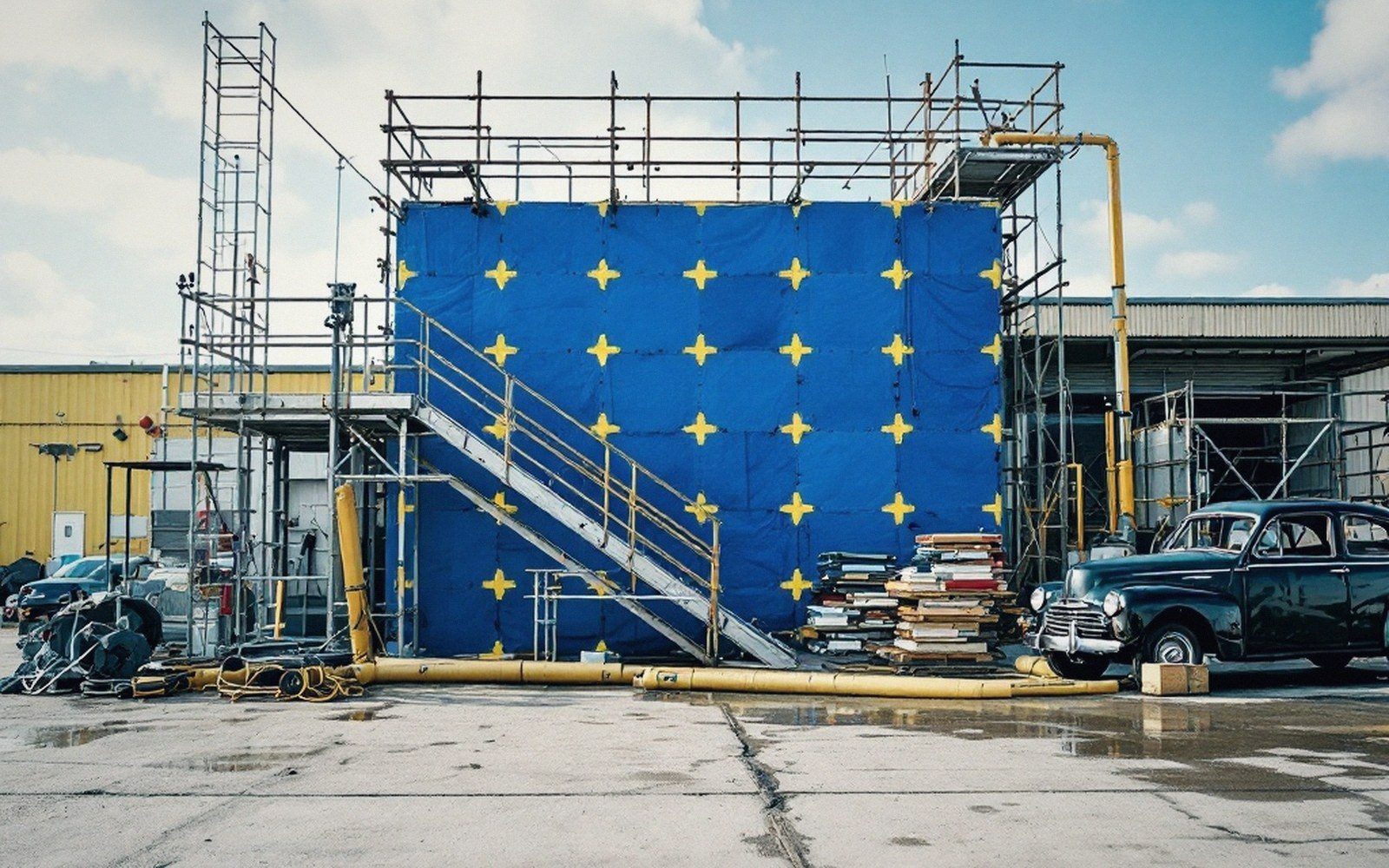
Contact with the bag is not a single moment; it is a deceleration extended across distance. The airbag compresses under load, and that compression is the mechanism: what was a sixty-foot-per-second velocity at the moment of contact becomes zero over the depth of the bag's collapse. The pressure spec on the bag is the coordinator's way of controlling how quickly that deceleration happens — too firm, and the stop is too abrupt; too soft, and the performer sinks through the useful collapse range before losing enough speed. Getting that number right is the work.
The camera runs. The coordinator watches in real time. The performer is up and clear of the bag and the cut is called, and then the team walks back to the landing zone to debrief: where did contact happen relative to center, what did the body position look like at the moment before contact, is there anything to adjust.
Often there is an adjustment. Often the shot is done in a second take.
The only variables still in play are the ones the performer controls with their body, and those variables have been trained to near-automaticity.
Why the Machine Metaphor Is Accurate
A machine does not perform well because of the moment of operation; it performs well because of the engineering that preceded it. The fall is mechanical in a literal sense — a mass moving through air under gravity, decelerating against a designed surface — but it is also mechanical in the broader sense that every variable has been anticipated, addressed, tested, and handed a contingency.
The coordinator is the designer. The rehearsal process is the testing phase. The bag is the terminal component. The safety team — the people standing on their marks before the call — are the redundancy layer that makes the system able to stand down if something in the machine deviates from spec. Anyone in that crew can call a halt. The protocol for doing so is established before the first rehearsal rep, not as a formality but as an operational necessity, because a system in which only one person can stop the process is not a safe system.
What you see on screen is two seconds. What made those two seconds survivable is a set of interlocking decisions — about height, departure geometry, bag specification, rehearsal repetitions, abort protocol, and personnel positions — that were made and remade across most of a week. The fall looks like a leap of faith. It is the opposite: it is a structure you climb into, and the structure was built long before you stepped off the edge.
Second Unit is an independent publication about stunt work and practical effects. It is not an awards body, production company, training provider or industry organisation.