The Safety Apparatus
The Breakdown
- Manages
- Risk, on paper, first
- Turns it into
- A script line into a list of gags
- In the hands of
- The stunt coordinator
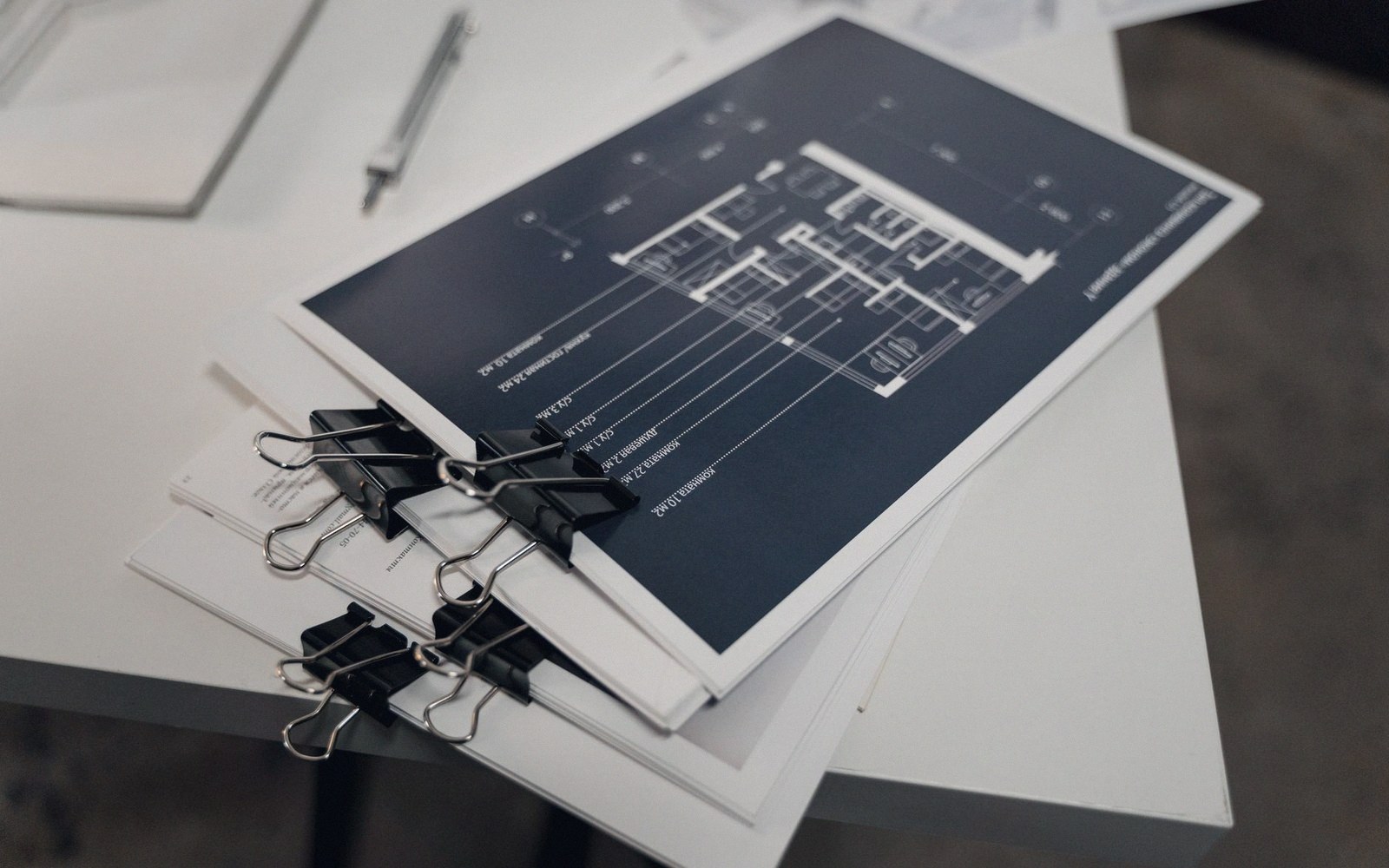
Every gag starts as a sentence on a script page — and then someone has to count what's in it
Before a single piece of steel is ordered, before a rehearsal schedule is set, before the location scout returns with measurements, the stunt coordinator sits down with the script and performs what the industry calls a breakdown. It is not a dramatic act. It looks like reading with a pencil. It produces, eventually, a document the coordinator can hand to a producer, a director and a first assistant director and say: here is what this sequence actually contains, and here is what it will take to do it safely enough to repeat.
The breakdown is the moment when a piece of dramatic writing becomes a list of physical events. A sequence that reads as three paragraphs of action — a fight that moves through a burning room, ends at a window, and spills onto a fire escape — contains, on examination, discrete gags: the fight choreography, the proximity to the burn, the break through the window glass, the fall to the fire escape, the landing itself. Each gag has its own rig logic, its own number of personnel, its own medical position. Writing them as a single scene is how screenwriting works. Separating them is how stunt work works, and the two have to be reconciled before either is safe.
What the document actually contains
A breakdown lists every identifiable hazard in the order it appears on screen, and beside each one it records the proposed gag, the equipment category the gag falls into, a preliminary rehearsal plan, and the key names — who performs it, who coordinates the specific element, who is the safety officer for that moment, who calls the abort. That last column is not an afterthought. The question of who can call a stop is structural, and the breakdown is where it gets answered on paper long before anyone is on set.
The hazard list is built conservatively. Coordinators habitually over-count at this stage, flagging transitions that might not end up being gags at all — a stumble near a railing that the director might simply cut around, a vehicle pass that could be handled by a second unit driving shot with no proximity to cast. Some items get collapsed later. None are added later that were not considered at this stage. The breakdown is not revised upward in the field; if something is not in the document, it should not be in the shoot.
From the build
How the document is built
- Hazard listevery identifiable risk in the sequence, in screen order; over-counted at this stage deliberately
- Equipment categorycoarse classification: fall, vehicle, fire, wire, precision driving, combination
- Personnel requirementminimum safe-operating-numbers by function, not yet by name; function must appear in budget or it will not be on set
- Rehearsal structurea shape, not a schedule: number of build-up passes, expected full-rehearsal point, whether an off-site rehearsal venue is needed
- Cumulative risk mappingsame performer across multiple gags in a day becomes visible when the breakdown is laid out chronologically
Equipment categories at this stage are coarse. The coordinator is not specifying a particular descender model or a precise box-rig configuration — that comes in the rigging design phase, which the breakdown enables. At breakdown stage the categorisation is: fall, vehicle, fire, wire, precision driving, combination. Combinations are where most of the subsequent engineering conversation concentrates, because a gag that is both a wire pull and a proximity fire is not simply two gags added together. It is a set of interactions that each element must be designed around. Combinations multiply coordination requirements, not just double them.
Alongside the gag list runs a parallel document the coordinator produces almost simultaneously: the personnel requirement. This is not a cast list and not a crew list. It is a minimum safe-operating-number for each gag, broken down by function. A burn gag has an extinguisher position on each side, a safety officer, a medic at a specific distance, and the people standing just outside frame who are never in the shot and never optional. A fall has a rigger, an additional rigger, the pad supervision, the medic, the coordinator and whoever is calling the count from position. The breakdown names the function; individual hiring fills the name in later. But if the function is not in the breakdown, it will not be in the budget, and if it is not in the budget, it will not be on the day. That chain is why the breakdown exists before money conversations, not after.
The rehearsal plan and what it acknowledges
Every gag in the breakdown carries a preliminary rehearsal structure. At this stage it is a shape, not a schedule: how many passes at reduced parameters before the gag goes to camera, at what point the coordinator expects to see a full rehearsal, whether a location rehearsal at a different venue is required before the unit arrives at the actual set. The coordinator is not guessing. They are applying pattern recognition from previous work: a fall of this category requires this many build-up runs; a vehicle sequence of this complexity requires this many mark-finding passes; a fire gag of this duration requires a full dry run, a wet run, and a technical rehearsal before the ignition is set.
What the rehearsal plan is also doing — and this is easy to miss — is acknowledging risk honestly to the production. A breakdown that shows nine days of prep and three days of principal photography for a sequence tells the producer that this is a complex sequence with real technical demands. A breakdown that shows the same sequence as two days of prep and one day of shooting is a breakdown that has either misread the sequence or is under-promising to survive budget pressure. Experienced coordinators understand that both documents will be read critically, and that a breakdown that understates requirements does not protect anyone it was intended to protect. The rehearsal plan is the part of the breakdown that makes the coordinator's risk assessment legible to non-specialists.
The breakdown is the moment when a piece of dramatic writing becomes a list of physical events.
There is a related function that rarely gets named directly: the breakdown is where cumulative risk becomes visible. A single stunt performer doing a fall in the morning and a wire pull in the afternoon is not two independent gags; it is two gags on the same body. The breakdown, laid out as a sequence of days and names, forces that calculation into view. Scheduling decisions that look administrative — who is on which day, which gag runs first — are often safety decisions, and the breakdown is the document that makes them.
After it leaves the coordinator's hands
The breakdown circulates to a small group: the director, the first AD, the production designer (because several gag categories have set requirements that have to be built in from the start), the line producer, and in larger productions the supervising stunt coordinator if one exists above the unit coordinator. Each reads it from a different angle. The director is reading for coverage: what the sequence needs to yield on screen. The first AD is reading for time: how these requirements slot into the shooting schedule. The line producer is reading for cost. The coordinator is reading for feasibility feedback, because the breakdown is also, implicitly, a question: does the production intend to make this sequence as written?
Sometimes the answer coming back is no — not this version of it. The director decides that the fire escape fall can be a cut rather than a continuous gag. The vehicle pass gets moved to a controlled environment rather than the practical street location. These are legitimate responses. The breakdown absorbs them as revisions: the revised gag list is re-issued, the personnel requirements are adjusted, the rehearsal plan is updated. The document is not precious. It is a working tool and it stays alive until the last gag in the sequence wraps.
What the breakdown is not is a rubber stamp. A coordinator who produces one is not certifying that a sequence is risk-free — that is not what the document claims, and any production that reads it that way has misread it. The breakdown is a structured account of what the risks are, how they are proposed to be managed, who is present for each one, and what the rehearsal process looks like before anything goes to camera. Risk is not eliminated by writing it down. It is counted, distributed across the right people, and made legible to everyone who has to act on it. Counting is where management starts.