The Safety Apparatus
Rehearsal, at Half the Height
- Manages
- Everything that can vary
- Turns it into
- A surprise into a repetition
- In the hands of
- Performer and coordinator
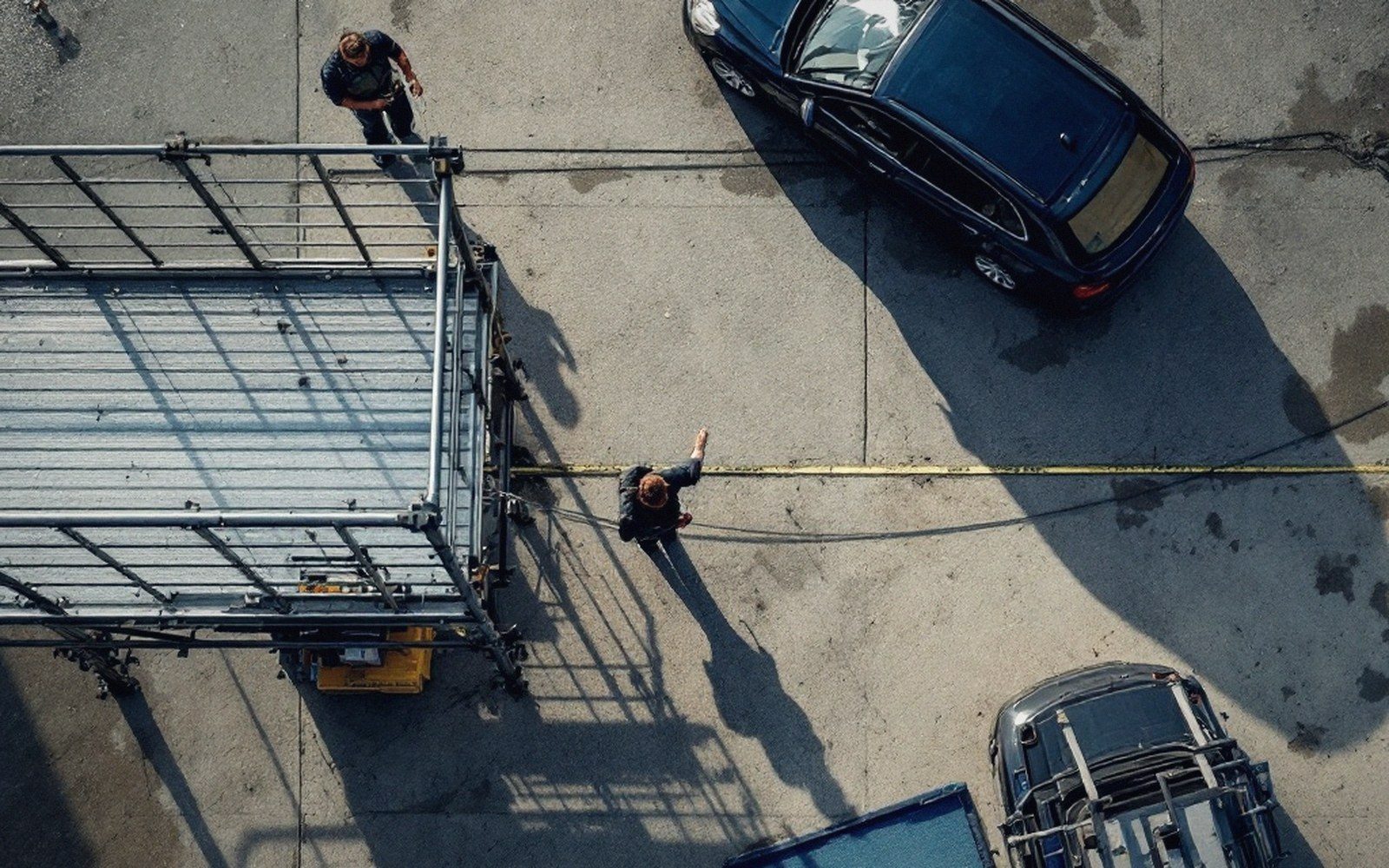
The fall is walked before it is fallen. Lower platform, same turn, same count — the goal is to make the interesting part the most boring thing on the lot.
The Logic of the Lower Platform
There is a version of this that sounds counterintuitive: the most important day in the preparation of a high fall is not the day the performer goes over the edge. It is three or four days before, on a platform set at half the height, and the repetitions are counted not in minutes but in hours. Nothing about that day is spectacular. That is the point.
The coordinator's first concern, well before any rig goes up at full height, is whether the gag is genuinely repeatable — whether the body can do the same thing twice. A high fall is not improvised at the top; by the time a performer stands at the real edge, the turn, the tuck, the arm position and the count are already automatic. The brain has stopped deliberating. That shift, from deliberate to automatic, is exactly what rehearsal is manufacturing.
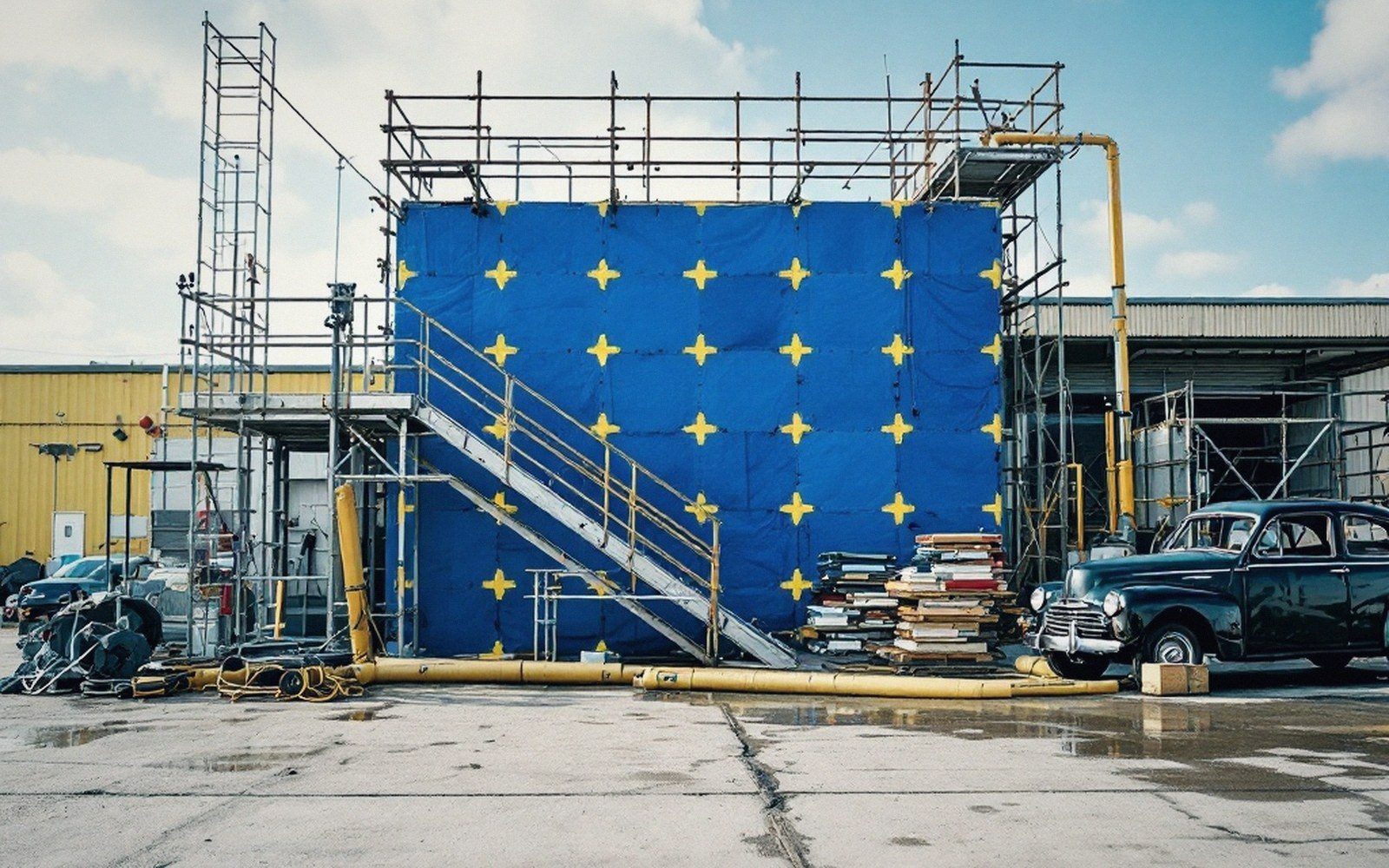
Half the height is not an arbitrary choice. It is high enough that the mechanics of the fall are real — the body is actually in the air, actually reading its own position, actually making the micro-adjustments that orientate the landing — but low enough that the cost of a small error is small. If the shoulder turns two degrees too early, that is information. At half height it costs a note from the coordinator and another run. At full height the margin is tighter and the note harder to deliver.
From the build
What the progression looks like
Boredom as the Engineering Criterion
The word that comes up consistently in conversations around this kind of preparation is boredom — not as a complaint, but as a diagnostic. When a performer is no longer interested in the fall, when the approach and the push and the count have stopped feeling like something that requires active management, that is the signal the coordinator is waiting for. The gag has moved from the forebrain into something more reliable.
This matters because adrenaline is not an ally on a high fall. It changes timing. A performer who is still excited by the gag will hit the push a fraction early; the body anticipates the air before the count reaches it. That fraction translates into rotation, and rotation translates into a body that does not arrive at the pad in the geometry the rig was dressed for. The mat stack, the crash pad or the box rig is designed around a known landing shape. Change the shape, and the material is meeting something it was not calibrated to receive.
Rehearsal at half height addresses this by running the count until the count is simply a clock the body obeys without commentary. The interesting-boring threshold is the coordinator's progress indicator, and they are watching for it without sentimentality. A performer who announces they are ready is less convincing than one who is visibly not thinking about it anymore.
The process is not the coordinator alone making a judgment. The stunt performer is actively reporting: where the spatial orientation felt early or late, where the instinct to reach corrected itself, where the turn felt different on one side. That conversation is technical, not reassuring. The coordinator is not there to say it will be fine; they are there to receive information and modify the approach. The medic is present throughout, not ceremonially but structurally — which is to say, their presence is part of the architecture of what makes the progression possible at all.
From the build
Key distinction
The Count as the Through-Line
The count — the verbal sequence that governs when action begins and when it ends — does not change between the rehearsal platform and the shot. This is not formality. The count is the one continuous element threading through every iteration at every height, and its invariance is exactly what makes it useful. When something in the environment changes — lighting conditions, the specific texture of the platform, the weight of a costume the performer has not worn before — the count does not change. The performer has a fixed point.
That fixed point is what allows the count to function as an abort mechanism as well as a starting signal. If the approach feels wrong before the commitment point, the same verbal protocol that starts the gag can stop it. The coordinator and the performer have a shared language for not now that was established during those hours on the lower platform, not invented on the day. Without those repetitions, the abort call has to compete with momentum — physical and psychological — and it tends to lose.
There is a version of this that sounds counterintuitive: the most important day in the preparation of a high fall is not the day the performer goes over the edge.
Costume and props are introduced progressively across the rehearsal sequence. A performer does not go to the lower platform on the first day in full costume; the additional weight, the restricted peripheral vision of a helmet or a hood, the way a coat moves in the air — these are variables, and they are added one at a time. By the day the full rig goes to height, the costume is already boring too. It has been worn through enough repetitions that the body accounts for it without being asked.
What Stops the Progression
Not everything progresses cleanly. The coordinator is watching for several things that pause or reset the sequence, and the most common of them has nothing to do with skill. Fatigue is the most reliable enemy of consistency. A performer who has done twelve repetitions on an afternoon is not doing the same gag on the thirteenth that they were on the fifth. The count sounds the same; the body is elsewhere. Experienced coordinators recognise the quality of inattention that looks like boredom but is actually depletion, and those are not the same thing at all. One of them is the goal; the other is the reset condition.
Weather matters, particularly for falls with any horizontal travel — and most falls that are cut to look vertical actually carry the performer through a shallow arc. Wind is not a constant and it cannot be fully rehearsed against; what rehearsal provides instead is a body that has found its orientation so reliably that a small unexpected force is corrected automatically rather than triggering a recalculation that arrives too late.
A change to the landing zone — a different pad configuration, a box rig replacing a mat stack, a repositioned camera that shifts where the safety crew stands — restarts part of the sequence. Not all of it; the fall mechanics do not need to be rebuilt. But the performer needs repetitions with the new configuration before the full height is sanctioned, because what they are calibrating to is not just their own body in the air. They are calibrating to the specific location of the thing that will catch them.
They are calibrating to the specific location of the thing that will catch them.
The Boring Day Is the Best Day
Visitors to a set on the day a big fall is shot tend to be watching the performer. The people who built the gag are watching everything except the performer. They are watching the count, the wind, the mat crew, the medic's position, the abort signal. The fall itself, by that point, has been witnessed dozens of times on the lower platform. It has become exactly as interesting as a well-run machine doing what it was built to do.
That is the achievement. The spectacular image the audience sees — the body leaving the edge, turning, falling, the world dropping away — is the last proof of a process designed to make that moment the least surprising part of the day. Boredom, in this specific context, is what competence feels like from the inside of the rig.
Second Unit is an independent publication about stunt work and practical effects. It is not an awards body, production company, training provider or industry organisation.